Call Today - 24/7 Emergency Services


Water Damage Restoration
Professional water extraction, moisture detection, structural drying, affected material removal, drying equipment setup, and property stabilization for residential, commercial, and multi-unit properties.
Serve Xpert helps property owners respond to water damage caused by plumbing failures, roof leaks, appliance leaks, overflows, flooding, storm intrusion, sewage backups, and fire suppression water across Maryland, Pennsylvania, Delaware, and Northern Virginia.
How Water Damage Affects Buildings
Water damage affects more than the water you can see. When water enters a property, it can absorb into drywall, flooring, baseboards, insulation, framing, subflooring, cabinets, ceiling materials, trim, and hidden structural cavities.
Many building materials absorb and hold moisture. Water can move upward, outward, and behind finished surfaces through wicking, gravity, capillary movement, air movement, and elevated humidity. Even after standing water is removed, trapped moisture may remain inside materials.
Water damage can also change over time. A clean water source can become more contaminated if it sits too long or contacts building materials, soil, debris, bacteria, affected contents, or unsanitary surfaces.
The longer moisture remains, the greater the risk of swelling, staining, odor, material breakdown, microbial growth conditions, and secondary damage. Because moisture can move into areas that are not visible at first, professional water damage restoration should begin with inspection, moisture detection, documentation, and a clear drying plan.
Types of Water Damage Categories
Water damage is not all the same. The source of the water, contamination level, affected materials, and length of exposure can change the restoration approach.
Category 1 Water
Category 1 water comes from a sanitary source, such as a clean supply line, clean toilet tank, or certain appliance lines. Even clean water can damage building materials and may become more contaminated if it sits too long or contacts affected materials.
Category 2 Water
Category 2 water may contain contamination and can create health concerns if contacted or ingested. This can include some appliance overflows, washing machine discharge, toilet overflow without feces, or water that has traveled through affected building materials.
Category 3 Water
Category 3 water is grossly contaminated and may contain bacteria, sewage, pathogens, or hazardous substances. This can include sewage backups, floodwater, storm surge, groundwater intrusion, and toilet overflow involving fecal matter.
Fire Suppression Water
Water used during firefighting can carry soot, ash, debris, chemicals, and smoke residue into building materials. Fire suppression water may require both water damage restoration and fire or smoke-related cleaning.
Storm or Groundwater Intrusion
Storm or groundwater intrusion can include water entering from outside the structure, hydrostatic pressure, groundwater seepage, sump pump failure, foundation seepage, storm-related ground saturation, and water pushing through basement floors, walls, cracks, joints, or porous masonry.
Classes of Water Damage
Water damage classes help describe how much water has been absorbed and how difficult the drying process may be.
Class 1 Water Damage
A smaller amount of water affects limited materials. Moisture absorption is lower, and drying may be more straightforward when addressed quickly.
Class 2 Water Damage
Water affects a larger area and may involve carpet, padding, walls, baseboards, flooring, and structural materials. More drying equipment and moisture monitoring may be needed.
Class 3 Water Damage
Water affects a large area or comes from overhead, saturating ceilings, walls, insulation, flooring, and structural materials. This often requires more aggressive extraction, affected material handling, drying, and monitoring.
Class 4 Water Damage
Water affects hard-to-dry or low-permeance materials such as hardwood, plaster, concrete, brick, stone, or dense structural materials. Specialty drying methods, managed drying zones, and extended monitoring may be required.
Why the Water Source Is Only the Starting Point
The original source helps begin the evaluation, but it does not tell the entire story. Water can change condition after contacting soil, debris, building materials, microorganisms, or contaminated surfaces. Time, temperature, stagnation, and the materials involved can also change the restoration plan. That is why professionals evaluate the current condition of the water and affected materials—not only where the water started.
Visible Water, Absorbed Water & Hidden Moisture
Liquid on the floor is often the easiest moisture to remove. Water can also move through carpet and pad, wick into drywall and wood, travel through seams by capillary action, and move as vapor into cooler or drier materials. Dense materials can retain bound moisture after surfaces look dry. Moisture mapping, material-specific readings, comparison areas, and repeated monitoring help determine whether drying is actually progressing.
Safety Conditions Can Change the Work
Standing water near electrical equipment, wet ceilings, damaged structural materials, sewage, suspected mold, and regulated building materials can require additional controls or qualified trades. Opening walls or flooring can also reveal lead-based paint, asbestos-containing material, or other conditions that should not be disturbed without the appropriate evaluation.
Drying Is Verified, Not Guessed
Professional structural drying uses an established dry standard or comparable unaffected material, psychrometric readings, equipment performance, and repeated moisture measurements. Equipment is adjusted as conditions change and removed when the remaining materials have reached the documented drying goal—not simply when the room feels dry.
How Water Moves Through a Property
Water does not always stay where the leak began. It can move under flooring, behind walls, through ceiling cavities, into cabinets, beneath baseboards, into insulation, across subfloors, and into adjacent rooms.
Basements and lower-level areas may also be affected by hydrostatic pressure, groundwater seepage, sump pump failure, foundation seepage, or storm-related ground saturation that pushes moisture through floors, walls, cracks, joints, or porous masonry.
Moisture can also move as vapor when humidity rises inside the building. This can affect nearby rooms, contents, wall cavities, closets, HVAC-related areas, and materials that were not directly touched by standing water.
A proper water damage inspection should review visible water, hidden moisture, affected materials, odor, humidity, temperature, source conditions, safety concerns, and the potential for secondary damage.


Materials, Contents & Hidden Areas
The right drying plan depends on what materials were affected, the water category, and how long moisture has been present.
Porous Materials
Drywall, insulation, carpet, padding, fabrics, paper goods, upholstery, and some contents can absorb water quickly. These materials may require drying, cleaning, removal, or documentation depending on category, condition, and contamination.
Semi-Porous Materials
Wood framing, subflooring, cabinets, sheathing, concrete, and similar materials can hold moisture below the surface. These materials may need moisture monitoring, managed drying, cleaning, targeted treatment, or selective removal.
Non-Porous Materials
Metal, glass, ceramic, sealed surfaces, and some hard plastics may be cleaned and dried when accessible and when the surface condition allows.
Contents & Personal Property
Furniture, clothing, documents, electronics, tools, stored items, and business contents may require evaluation, cleaning, inventory, drying, disposal coordination, or documentation.
Hidden Spaces
Water can affect wall cavities, ceiling spaces, cabinets, closets, crawlspaces, attics, underlayment, flooring systems, HVAC-related areas, and areas behind trim or baseboards.
Secondary Damage From Water
Secondary damage can occur when moisture is not addressed quickly or completely.
This may include microbial growth conditions, swelling wood, warped flooring, delaminated materials, damaged drywall, staining, odor, rust, corrosion, weakened adhesives, damaged insulation, affected contents, indoor humidity problems, and contamination spread.
Fast water extraction, structural drying, moisture monitoring, and affected material handling help reduce these risks.
WHAT WE DO
Professional Water Damage Restoration
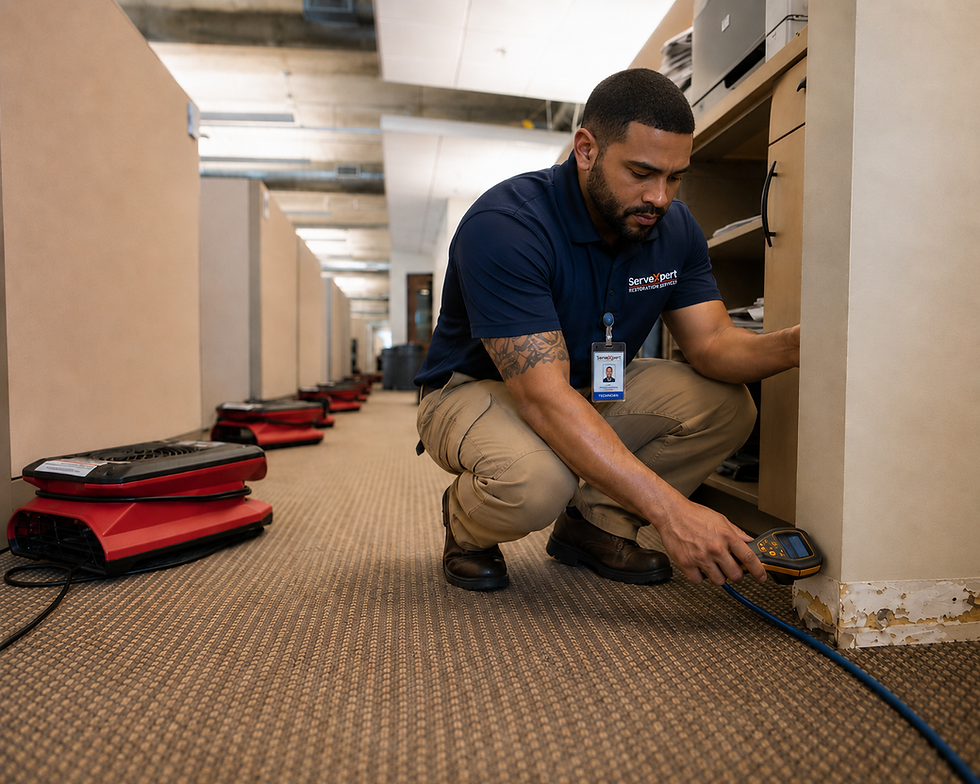
Serve Xpert provides water damage mitigation focused on water extraction, moisture detection, affected material handling, cleaning, targeted treatment when appropriate, drying equipment setup, structural drying, moisture monitoring, and property stabilization.
Our approach focuses on identifying the source area, determining the water category, reviewing affected materials, locating visible and hidden moisture, preparing affected areas, setting up proper drying conditions, monitoring moisture levels, and documenting the project clearly.
Water Damage Restoration Services
Water Extraction & Removal
-
Standing Water Extraction
-
Flood Water Extraction
-
Burst Pipe Water Removal
-
Basement Water Extraction
-
Crawlspace Water Intrusion Response
-
Appliance Leak Mitigation
-
Overflow Water Removal
-
Fire Suppression Water Removal
-
Sewage Backup Cleanup
-
Wet Material Removal
Drying & Moisture Control
-
Moisture Detection
-
Structural Drying
-
Drying Equipment Setup
-
Drying Chamber Setup
-
Dehumidification
-
Air Movement
-
Wall Cavity Drying Where Accessible
-
Subfloor & Framing Drying
-
Moisture Monitoring
-
Humidity Control
-
Final Moisture Documentation
Cleaning & Stabilization
-
Affected Surface Cleaning
-
Targeted Treatment When Appropriate
-
Odor Control
-
HEPA Filtration When Needed
-
Containment When Needed
-
Contamination-Related Cleaning
-
Affected Material Handling
-
Documentation of Non-Salvageable Materials
-
Property Stabilization

HOW WE PERFORM THIS SERVICE
Inspection & Moisture Assessment
We inspect affected areas, identify the source condition, determine visible and hidden moisture concerns, evaluate affected materials, and document the water damage conditions.
Water Category & Material Review
We review the water source, contamination risk, affected materials, duration of exposure, odor, visible damage, and safety concerns to determine the proper restoration approach.
Site Protection & Work-Area Setup
Before work begins, affected areas are prepared to help protect the property. This can include floor protection, contents protection, equipment placement, access protection, containment when needed, and separation from unaffected areas.
Water Extraction
Standing water and excess moisture are removed using professional extraction equipment to reduce saturation and help stabilize the property.
Affected Material Handling
Wet, damaged, contaminated, or non-salvageable materials may be removed when required by condition, water category, safety concern, or written scope.
Cleaning & Targeted Treatment
Affected surfaces are cleaned and treated when appropriate based on water category, material condition, odor, contamination risk, and the service being performed.
Drying Equipment Setup
Air movers, dehumidifiers, and other drying equipment may be placed based on moisture readings, affected materials, humidity, temperature, airflow needs, and site conditions.
Drying Chamber Setup
When appropriate, drying chambers may be set up to isolate the affected area and improve drying efficiency. This helps manage airflow, temperature, humidity, and equipment performance within the affected zone.
Structural Drying & Dehumidification
Serve Xpert uses drying equipment, dehumidification, air movement, and moisture monitoring to help dry affected structural materials based on the documented conditions and service needs.
Monitoring & Adjustments
Moisture readings, humidity, temperature, and drying progress are monitored so equipment placement, airflow, drying chambers, and drying strategy can be adjusted as needed.
Final Verification & Completion Documentation
Serve Xpert reviews the completed work, documents the service, verifies drying progress when applicable, and provides next-step recommendations if repairs or additional services are needed.
Why Customers Choose Serve Xpert
The Serve Xpert Standard
Serve Xpert brings structure, documentation, and accountability to water damage restoration.

Fast Emergency Response
Water damage can spread quickly. Serve Xpert responds to help stabilize affected properties and reduce secondary damage.
Moisture-Based Decisions
Drying plans are based on moisture readings, site conditions, material response, water category, humidity, temperature, and documented observations.
Professional Equipment
Equipment may include extraction tools, air movers, dehumidifiers, heaters when appropriate, moisture meters, thermal imaging cameras, HEPA filtration units, containment materials, drying chamber materials, and documentation tools.
Managed Drying Environments
When appropriate, Serve Xpert can set up drying chambers to help isolate affected areas, improve drying efficiency, and better manage temperature, humidity, and airflow.
Safety-Focused Work
Water category, contamination risk, structural conditions, electrical concerns, moisture levels, odor, and occupant safety are considered throughout the project.
Residential & Commercial Service
Serve Xpert supports single-family homes, multi-unit properties, rental properties, managed properties, offices, retail spaces, commercial buildings, and other property types.
Clear Documentation
Documentation can include photos, moisture readings, drying logs, affected material notes, recommendations, invoices, Certificates of Completion, and completion summaries.
DOCUMENTATION & REPORTING
Serve Xpert provides organized documentation for transparency, customer records, insurance records, real estate needs, property management records, and project files.
Documentation can include:
-
Photo Documentation
-
Observed Condition Notes
-
Moisture Readings
-
Thermal Imaging When Applicable
-
Water Source Observations
-
Water Category Notes
-
Affected-Area Details
-
Material Condition Notes
-
Drying Logs
-
Equipment Records
-
Environmental Readings
-
Findings & Recommendations
-
Scope of Work Details
-
Service Records
-
Estimates
-
Invoices
-
Project Progress Notes
-
Before-and-After Documentation
-
Certificate of Completion
-
Completion Summary
-
Insurance or Real Estate Documentation
Serve Xpert documents observed conditions, explains recommended next steps, and provides clear records for the work performed. We remain focused on the property owner’s needs, the documented conditions, and the services required at the property.
Insurance-related documentation is provided through organized records and scope clarity. Serve Xpert does not represent the insurance carrier and does not control coverage decisions, approvals, or claim outcomes.

Water Damage: What Property Owners Need to Understand
Water damage decisions are based on more than how much water is visible. The source, contamination level, amount of affected material, absorption, evaporation load, hidden migration, humidity, temperature, and time all influence the restoration plan. Two rooms that look equally wet can require very different safety controls, removal decisions, drying strategies, and monitoring.
Water Category and Water Class Answer Different Questions
Water category describes contamination and exposure concerns associated with the water source and the conditions it encountered. Water class describes how extensively materials have absorbed moisture and the evaporation load the drying system must manage. A higher class does not automatically mean the water is more contaminated, and a lower class does not mean the water is sanitary.
Water Can Move Far Beyond the Visible Wet Area
Liquid water can wick upward through drywall and framing, move under flooring, enter insulation and cabinets, and travel through seams or structural cavities. Water vapor can also raise humidity and affect nearby materials. Moisture mapping helps identify the actual perimeter so drying is based on measured conditions instead of appearance alone.
Structural Drying Is a Managed Process
Professional drying combines bulk water extraction with controlled evaporation, air movement, dehumidification, temperature management, and repeated moisture measurements. Equipment is adjusted as materials respond. Drying is complete when affected materials reach appropriate dry targets or when the remaining material condition shows that another action is needed—not simply when the surface feels dry.
Contamination Changes Material-Salvage Decisions
Sewage, outside floodwater, long-standing water, and water that has contacted unsanitary materials can require different personal protective equipment, work-area controls, cleaning, removal, and disposal decisions. Porous materials that trap contamination may not be appropriate to dry in place. The decision depends on the source, material, exposure, condition, and project requirements.
Time Matters Because Moisture Supports Secondary Damage
Prompt extraction and drying can help reduce swelling, delamination, staining, corrosion, odor, and conditions favorable for microbial growth. Public health guidance commonly recommends drying wet materials promptly and, when feasible, within roughly 24–48 hours to help reduce mold-growth potential. That timeframe is a prevention goal, not a guarantee that mold will or will not be present.
Learn More About Water Damage & Structural Drying
Use these Serve Xpert resources to understand the technical questions that often determine the water-restoration plan:
When Water Damage Connects to Another Serve Xpert Service
Water losses often overlap with other restoration conditions. Link customers directly to the next service when the documented condition changes.
.jpg)
when the water came from sprinklers, hoses, or other fire-suppression activity and smoke/soot damage is also present.


when wind, roof openings, exterior flooding, or storm-driven water caused the intrusion.

when sewage, grossly contaminated water, bodily waste, or another biological contamination source is involved.
Need Help Identifying the Correct Starting Point?
Tell Serve Xpert where the water came from, when the loss occurred, whether the source has been stopped, what materials are visibly affected, and whether sewage, floodwater, electrical hazards, or other contamination is involved.
Flexible Payment & Financing Options
Unexpected water damage can be stressful. Paying for restoration work should not delay needed mitigation when qualified financing is available.
Financing is available through Wisetack. Customers can review options and prequalify without impacting their credit score. Terms and rates are based on approval.
All financing is subject to credit approval. Terms may vary based on individual qualifications.
SERVICE AREA
Serve Xpert provides water damage restoration, water extraction, structural drying, moisture control, affected material handling, and stabilization services across Maryland, Pennsylvania, Delaware, and Northern Virginia.
Maryland
Serving Baltimore City, Baltimore County, Harford County, Cecil County, Anne Arundel County, Howard County, Montgomery County, Prince George’s County, Carroll County, Kent County, Queen Anne’s County, and surrounding communities.
Serving York County, Lancaster County, Chester County, Delaware County, Montgomery County, Berks County, Bucks County, Lebanon County, Dauphin County, Philadelphia County, and nearby areas.
Serving New Castle County, Kent County, Sussex County, Wilmington, Newark, Dover, Middletown, and surrounding areas.
Serving Northern Virginia communities including Arlington County, Fairfax County, McLean, and nearby areas based on location, urgency, scheduling, and project conditions.
Common Questions About Water Damage
Request Professional Water Damage Restoration
Water damage can continue spreading behind walls, under flooring, into ceilings, and through structural materials. Contact Serve Xpert for water extraction, moisture detection, affected material handling, structural drying, and property stabilization.
Address
210 W Pennsylvania Ave suite 100, Towson, MD 21204, USA
Phone Call