At a glance
What to know
- Category 1 starts from a sanitary source. Contact with contaminants or deterioration can change the category.
- Category 2 involves significant contamination. Category 3 is grossly contaminated and includes sewage and rising surface water.
- Drying class describes the evaporation load. Category and class inform different decisions.
Category 1 Water
Category 1 water begins from a sanitary source and does not initially pose a substantial contamination risk from the source itself.
Examples May Include
- Broken clean-water supply lines
- Some appliance supply-line failures
- Some tub or sink overflows when no contaminants are present
- Rainwater that has not contacted contaminated materials
Category 1 does not mean the building materials are automatically safe to keep. Water can move through insulation, flooring, wall cavities, dust, soil, old residues, or other materials and the condition can change with time and exposure.
Category 2 Water
Category 2 water contains a significant level of contamination and may cause discomfort or illness if contacted or consumed. It requires more caution than a sanitary-water loss.
Conditions That Can Contribute to Category 2
- Water from certain appliance discharges
- Water that has contacted materials or residues that add contamination
- Some overflow conditions containing detergents, organic matter, or other contaminants
- Water whose condition has deteriorated after time, temperature, or contact with the building environment
The actual category is determined from the loss conditions—not from the color of the water alone.
Category 3 Water
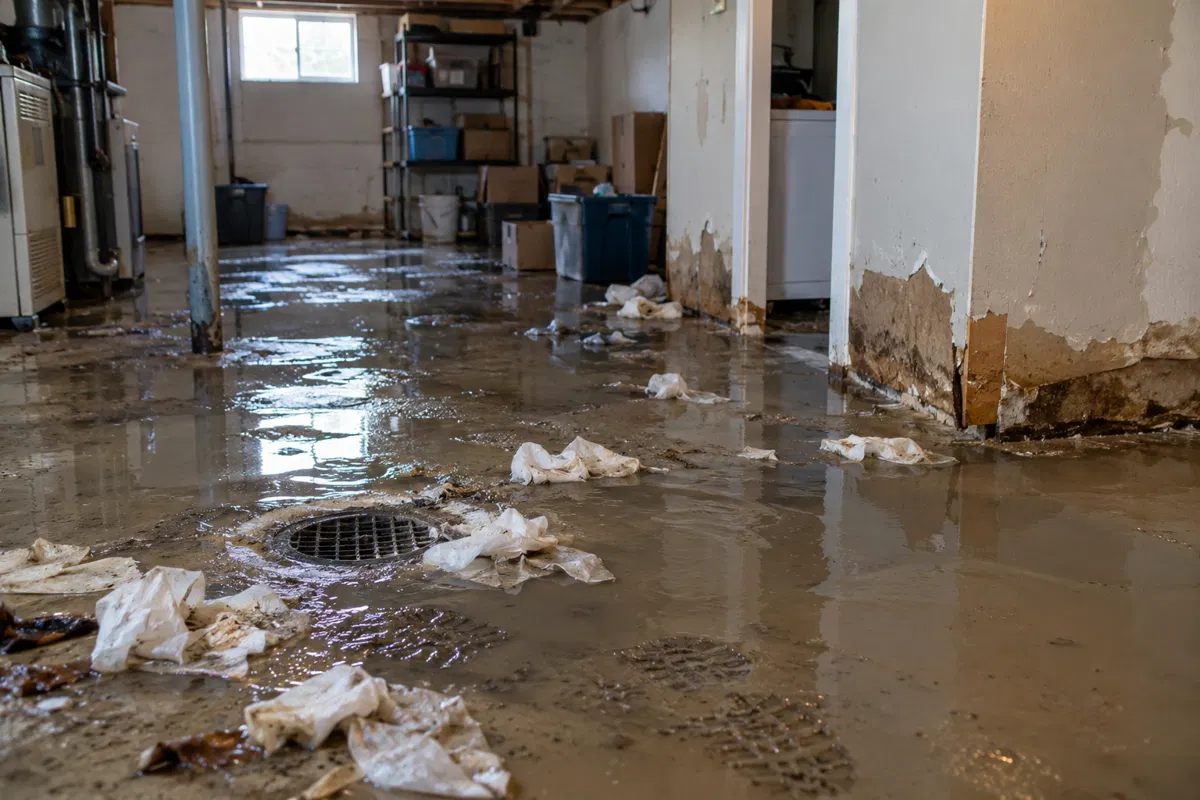
Category 3 water is grossly contaminated and can contain pathogenic, toxigenic, or otherwise harmful agents. Sewage is a common example, but Category 3 is broader than sewage alone.
Examples May Include
- Sewage backups and sewage-contaminated water
- Water containing fecal matter
- Some rising floodwater or surface water
- Water that has contacted heavily contaminated environments
- Water that has deteriorated to a grossly contaminated condition
Category 3 losses can require controlled access, personal protective equipment, containment or isolation where appropriate, removal of affected porous materials, detailed cleaning, decontamination procedures, and careful disposal decisions.
Related page: Sewage Backup & Category 3 Water Cleanup.
Water Categories Can Change
A water loss does not stay frozen in its original condition. Time, temperature, microbial activity, contact with contaminated materials, and movement through the building can change the restoration risk.
That is why professional restoration considers the current condition of the loss, not only what the original source was called.
Category Is Not the Same as Class
Category describes contamination. Class describes the approximate amount of water, affected material, absorption, and evaporation load involved in the drying challenge.
A large clean-water loss can have a high drying class. A small sewage loss can have a lower drying class but a much higher contamination concern.
Related page: Water Damage Classes 1–4.
How Category Affects Restoration Decisions
The water category helps guide decisions about work-area controls, affected-material handling, cleaning, drying, personal protective equipment, and whether certain materials can reasonably be restored.
Professional Evaluation May Consider
- Water source and source reliability
- Time since the loss occurred
- Temperature and environmental conditions
- Materials and assemblies the water contacted
- Visible or suspected contamination
- Odor and organic matter
- Occupant exposure and site-safety concerns
- Whether water migrated into hidden cavities or adjacent rooms
Why Porous Materials Matter
Carpet cushion, drywall, insulation, engineered wood, particleboard, upholstered contents, and other porous materials can absorb water below the visible surface. In contaminated-water losses, porosity can make cleaning and decontamination more difficult and can affect whether a material is retained or removed.
The correct decision depends on the material, the contamination, the amount of exposure, accessibility, and the written project scope.