
At a glance
Key takeaways
- Smoke residues can remain on surfaces, in porous contents, and in areas beyond the fire room.
- When and where odor returns helps guide the assessment. Odor alone cannot identify its source or establish a safety condition.
- We address odor-bearing material and residue before considering additional odor treatment. A qualified HVAC contractor can evaluate concerns involving the system.
Why smoke odor can return
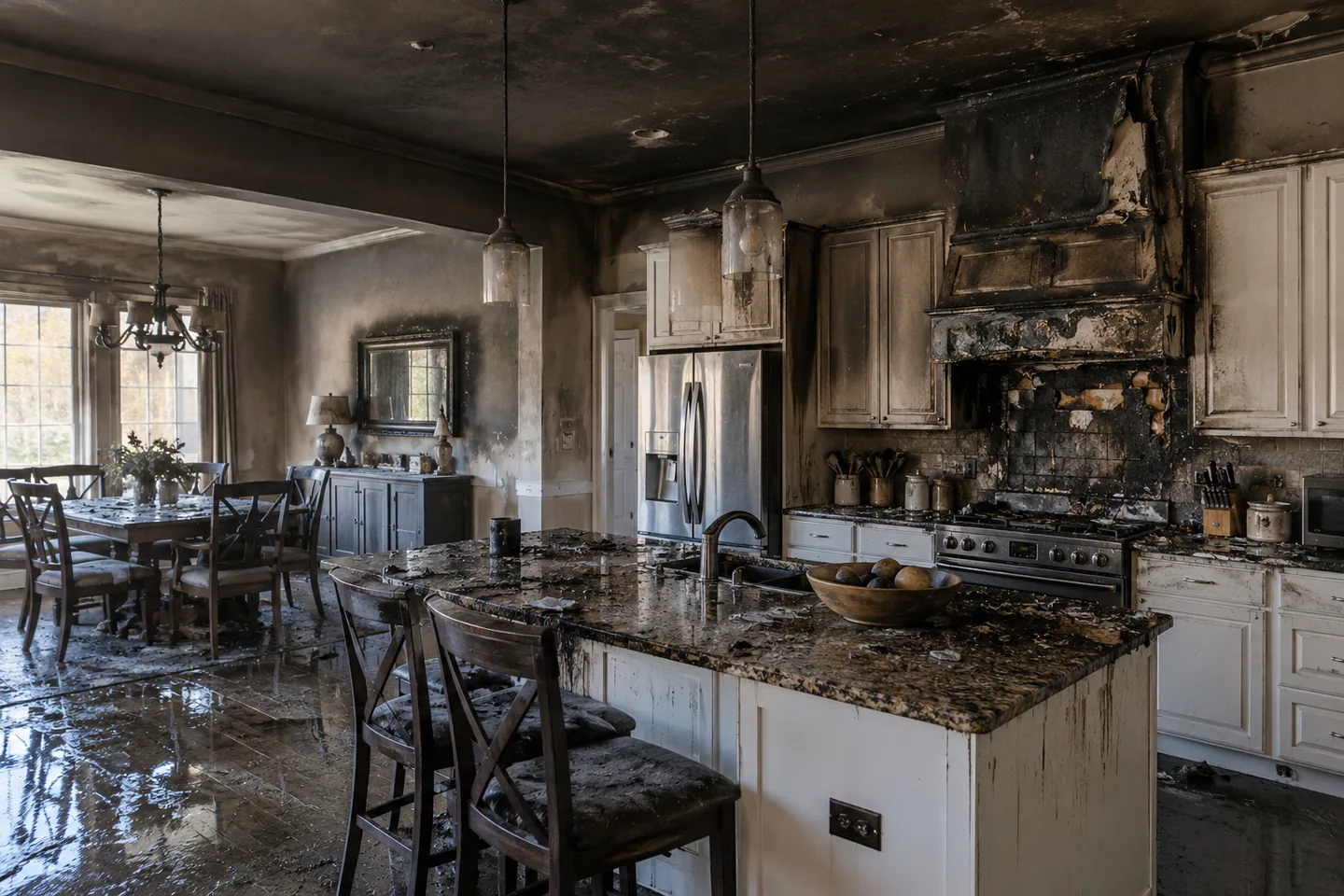
Airing out a room can reduce the smell temporarily while residues remain on materials. Smoke can also reach rooms that never burned. After the property has been released for access, note which rooms smell strongest and whether that changes when doors are opened or the air system runs. Share what was already cleaned or removed. Those details help narrow the areas that need checking.
Where the odor source may be hiding
Residues can settle on cabinets and trim, and affected fabrics or upholstered items can hold smoke odor. The assessment looks at where smoke traveled, what it contacted, and which surfaces or contents can be cleaned. Some areas may be inaccessible without additional work. Our guide to smoke and soot residues explains why residue and material type matter.
What a source-focused cleanup plan covers
We identify the affected areas and explain which odor-bearing materials may need removal and which surfaces or contents are suitable for cleaning. After addressing these sources within the written scope, we reassess and explain where additional odor treatment or specialist work may help. The scope and records identify areas we addressed and any remaining concerns.
When to involve an HVAC contractor
Tell us if the odor seems strongest near a vent or changes when the system runs. That observation can guide the review, and it does not establish the condition inside the system. A qualified HVAC contractor can evaluate the equipment and advise on cleaning, service, and safe operation. See what an HVAC evaluation can clarify after property damage.
What to share when you request service
Tell us when the fire occurred, which rooms or belongings were affected, where the odor returns, and what cleanup has already been done. Mention any areas the fire department, building management, or another authority has restricted. Photos and the prior scope, if available, can help us understand what still needs attention.