At a glance
What to know
- Make a photo record when safe and tell the team which belongings are urgent, valuable, or irreplaceable.
- Agree on who authorizes moves, specialty handling, and disposal before work begins.
- Electronics, artwork, records, and highly contaminated items can require specialist handling.
Inventory and Documentation
A contents project should use organized documentation. Photos, item descriptions, room location, condition, handling decision, and movement records help maintain accountability.
- Photo inventory
- Item or container labeling
- Room-of-origin tracking
- Condition notes
- Disposition notes
Pack-Out
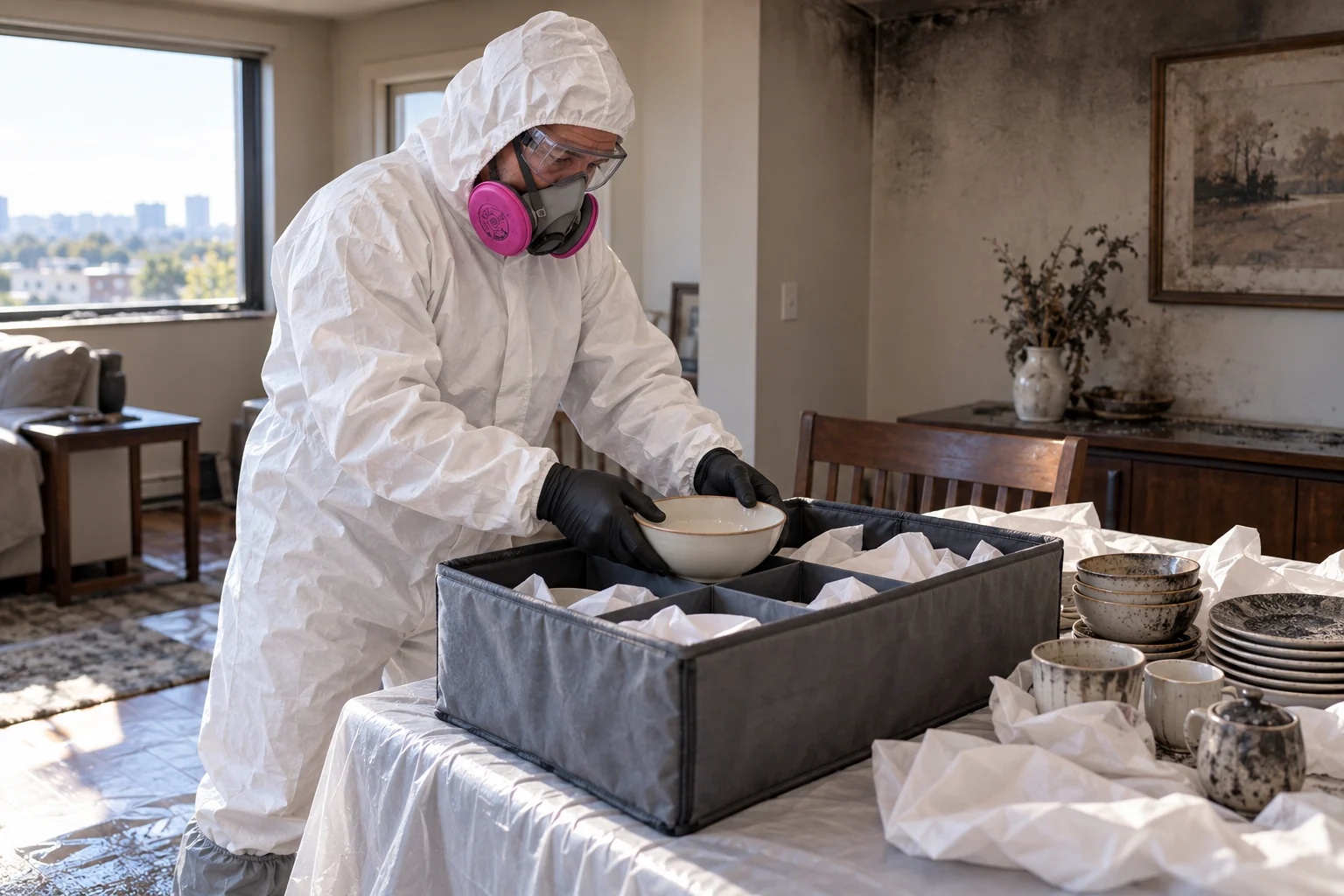
Items are inventoried, protected, and moved out of the work area when structural restoration requires access, when the environment is not suitable for contents, or when specialized cleaning is performed elsewhere.
On-Site Processing
Some items can remain at the property and be cleaned, protected, or relocated within a controlled area when doing so does not interfere with the structural work.
Pack-Back
After the structure is ready and the return is authorized, tracked contents are brought back and placed according to the project plan. The return process should reconcile the inventory and identify any item that remains with a specialty vendor, in storage, or designated as non-restorable.
What Determines Whether an Item Is Salvageable
- Type of contamination or residue and how deeply it penetrated the item.
- Heat exposure, physical deformation, corrosion, water saturation, staining, or material deterioration.
- Porosity and whether internal layers can be accessed and effectively cleaned or dried.
- Material compatibility with the cleaning, drying, and deodorization methods available.
- Replacement value, sentimental value, specialty-restoration options, and the customer's priorities.
- Whether the item can be safely handled, stored, and returned for its intended use.
Storage, Security, and Chain of Custody
Packed contents should remain identifiable and protected from additional damage. Storage conditions should account for moisture, temperature, security, fragile items, contamination status, and the need to retrieve particular property during the project. Movement between the loss site, cleaning facility, specialty vendor, storage, and final return should remain documented.
How to document items that need replacement
Some items need replacement because of severe damage, contamination, or unsafe conditions. Serve Xpert can photograph affected contents and provide inventory notes for your records. Your insurer determines coverage, valuation, and reimbursement.
Biohazard-Contaminated Contents Need Different Controls
Contents affected by blood, OPIM, sewage, decomposition fluids, sharps, or heavy animal waste may require restricted handling, personal protective equipment, controlled packaging, special cleaning decisions, or regulated waste procedures. An item that is valuable is not automatically safe or practical to restore.
What Property Owners Should Do Before Discarding Items
- Photograph important items and their condition when it is safe to do so.
- Separate identification, medications, financial records, legal documents, jewelry, cash, and sentimental items from ordinary debris.
- Ask whether electronics, documents, artwork, rugs, or other specialty contents should be evaluated before disposal.
- Do not energize water- or fire-exposed electronics simply to see whether they still work.
- Do not assume every smoke-, water-, mold-, or odor-affected item is automatically salvageable or automatically a total loss.