At a glance
Key takeaways
- Name one site contact who can coordinate access and approvals.
- Record affected rooms, shared areas, and interrupted operations.
- Ask for a written cleanup scope and note which decisions still need a qualified trade or local authority.
Confirm access and assign a site contact
Follow the directions of the responding authorities and your building’s emergency procedures. Record which areas are restricted, who controls keys and escorts, and who can approve cleanup. Share any known utility or equipment restrictions before the crew arrives.
Record where smoke showed up
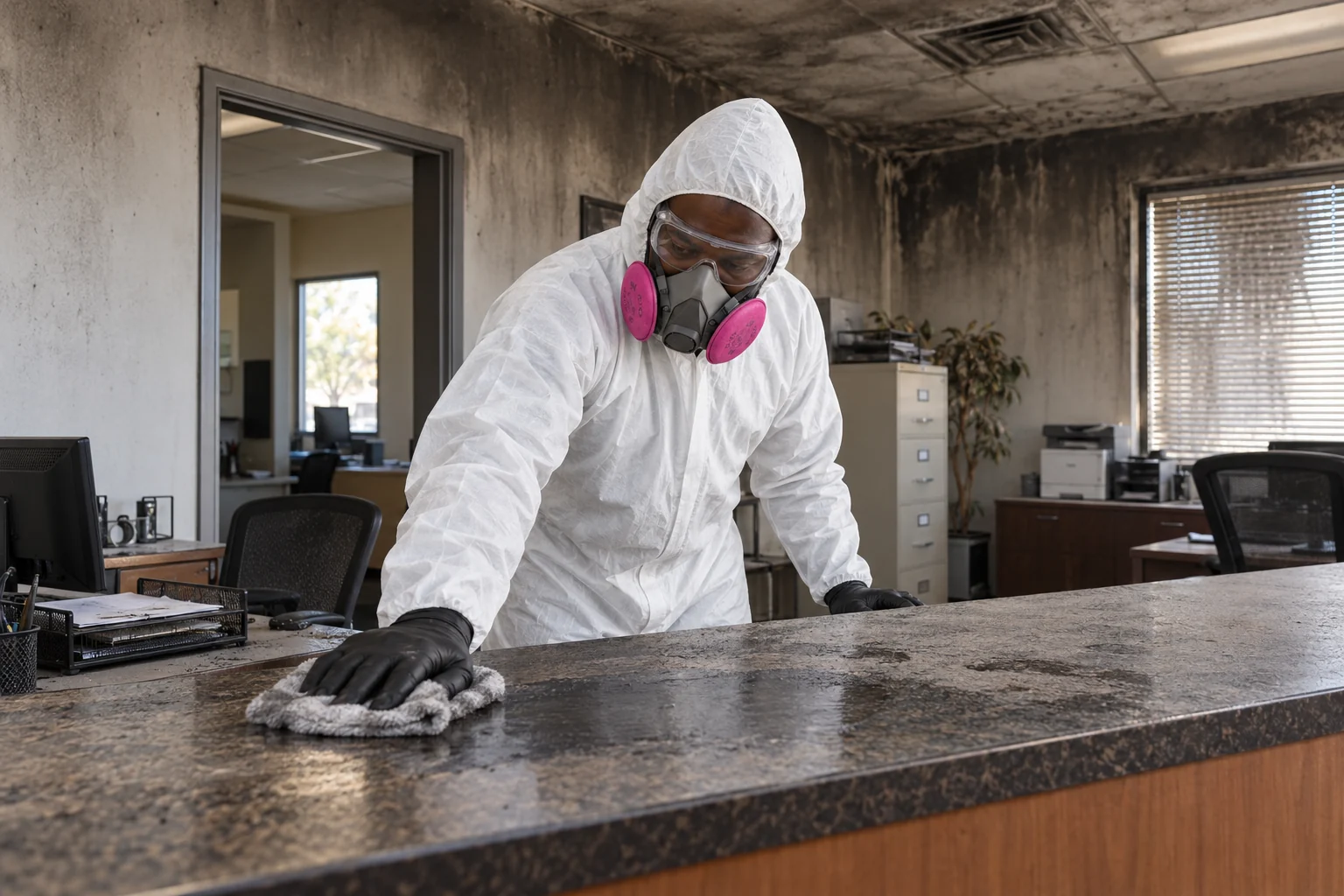
Note visible soot and smoke odor by floor, suite, and shared area. List affected stock or equipment, areas where water from firefighting was reported, and changes in operations. Use photos from areas where access has been cleared. Save them with your property damage records.
Set a schedule for occupant updates
Tell occupants which entrances or rooms are restricted, who will answer questions, and when they’ll get another update. Coordinate any questions about affected ventilation systems with the appropriate qualified provider.
Review the cleanup scope and handoff
Ask which surfaces and contents the cleanup includes, how the work will be documented, and whether separate repairs, trade evaluations, or approvals remain. Keep those items visible when planning the return to normal operations.
Request commercial smoke cleanup. Share your site contact, affected areas, and access restrictions.