
At a glance
What to know
- Dry, oily, and cooking residues can respond differently to wiping or cleaning. Color alone cannot identify their composition.
- Smoke can travel into rooms that never burned through air pathways and HVAC connections.
- Avoid rubbing deposits or operating affected systems before assessment. Tell the team if firefighting water also entered the property.
Dry Soot
Fast, high-temperature fires can produce fine dry particles that may be easier to remove from some surfaces when handled carefully. Aggressive wiping can smear certain residues into porous or textured finishes.
Oily or Wet Smoke Residue
Smoldering plastics, rubbers, oils, and other materials can create sticky or oily residues. These may require different cleaning chemistry, agitation, dwell time, or specialty methods.
Protein-Based Residue
Cooking and food-related fires can leave a thin, difficult-to-see residue with strong odor. The absence of heavy black soot does not mean the surfaces are clean.
Why the Cleaning Sequence Matters
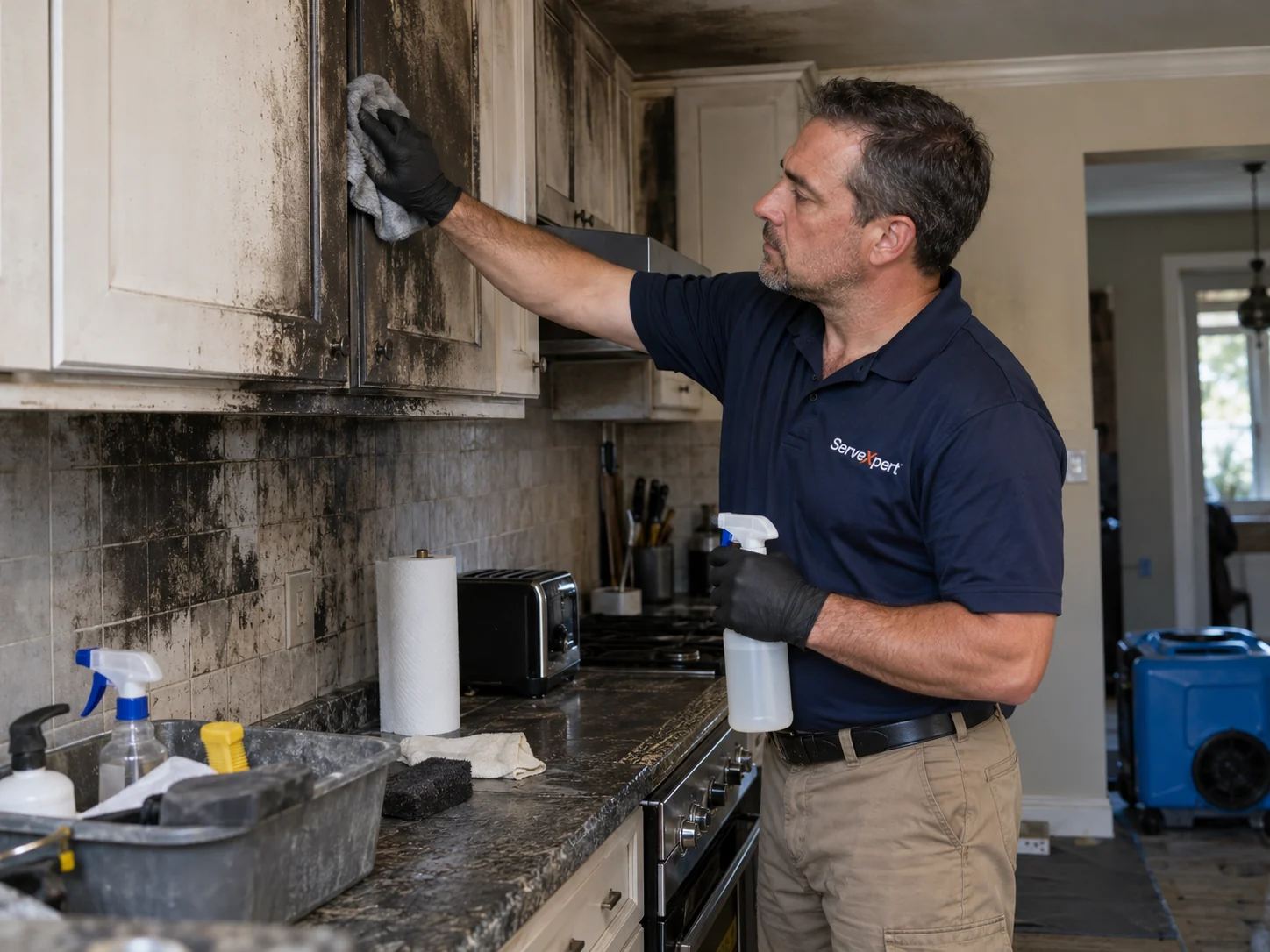
Loose particulate residue is usually addressed before aggressive wet cleaning. If dry, powdery soot is immediately rubbed with a wet rag, particles can smear, penetrate porous finishes, and become more difficult to remove. The technician tests the surface and residue first, then chooses dry, wet, solvent-based, alkaline, acidic, enzymatic, or other specialty methods as appropriate.
Examples of Factors That Change the Cleaning Method
- Whether the residue is loose and powdery or sticky and oily.
- Whether the surface is painted drywall, unfinished wood, metal, glass, stone, plastic, fabric, or another material.
- Whether heat altered the finish, coating, adhesive, dye, or substrate.
- Whether fire-suppression water or another contaminant mixed with the soot.
- Whether the item is structural, decorative, electronic, textile, or a high-value specialty content.
Secondary Damage Continues After the Flames Are Out
Combustion residues can contribute to corrosion, staining, discoloration, odor absorption, and finish damage after the fire is extinguished. Moisture from firefighting can simultaneously create swelling, staining, hidden moisture, and later microbial concerns. Rapid documentation and stabilization help determine what needs priority attention.
Time-sensitive pre-cleaning does not mean every surface should be scrubbed immediately. It means susceptible materials should be identified quickly and handled with the correct method before avoidable secondary damage becomes permanent.
How Smoke Reaches Areas That Never Burned
Smoke moves with heat, pressure differences, building leakage, stairwells, wall and ceiling openings, plumbing and electrical penetrations, and mechanical air movement. Fine residue may settle in cabinets, closets, adjacent rooms, ceiling cavities, return-air pathways, and on contents far from the visible burn area.
This is why a restoration scope should be based on the actual residue distribution—not only on the room where flames were visible.
What Determines Whether a Fire-Damaged Item Is Salvageable
- The type and amount of residue.
- Heat exposure and physical deformation.
- Porosity and whether residue penetrated beneath the cleanable surface.
- Water exposure from suppression activities.
- Finish stability, dye stability, corrosion, and material compatibility with cleaning methods.
- Replacement cost, sentimental value, specialty-restoration options, and whether cleaning can reasonably return the item to an acceptable condition.
What Property Owners Should Avoid
- Do not wipe soot-covered walls, ceilings, or finished surfaces with household wet cleaners before the residue is evaluated.
- Do not operate HVAC equipment simply to reduce odor if the system may contain fire residue.
- Do not use heat- or water-exposed electrical devices until an appropriate qualified professional determines they can be used.
- Do not wash specialty textiles, draperies, or soot-affected garments with ordinary laundry products before cleaning requirements are identified.
- Do not assume odor treatment alone replaces removal of the residue causing the odor.