At a glance
What to know
- Wait for the relevant authorities or trades to address access, electrical, and structural hazards.
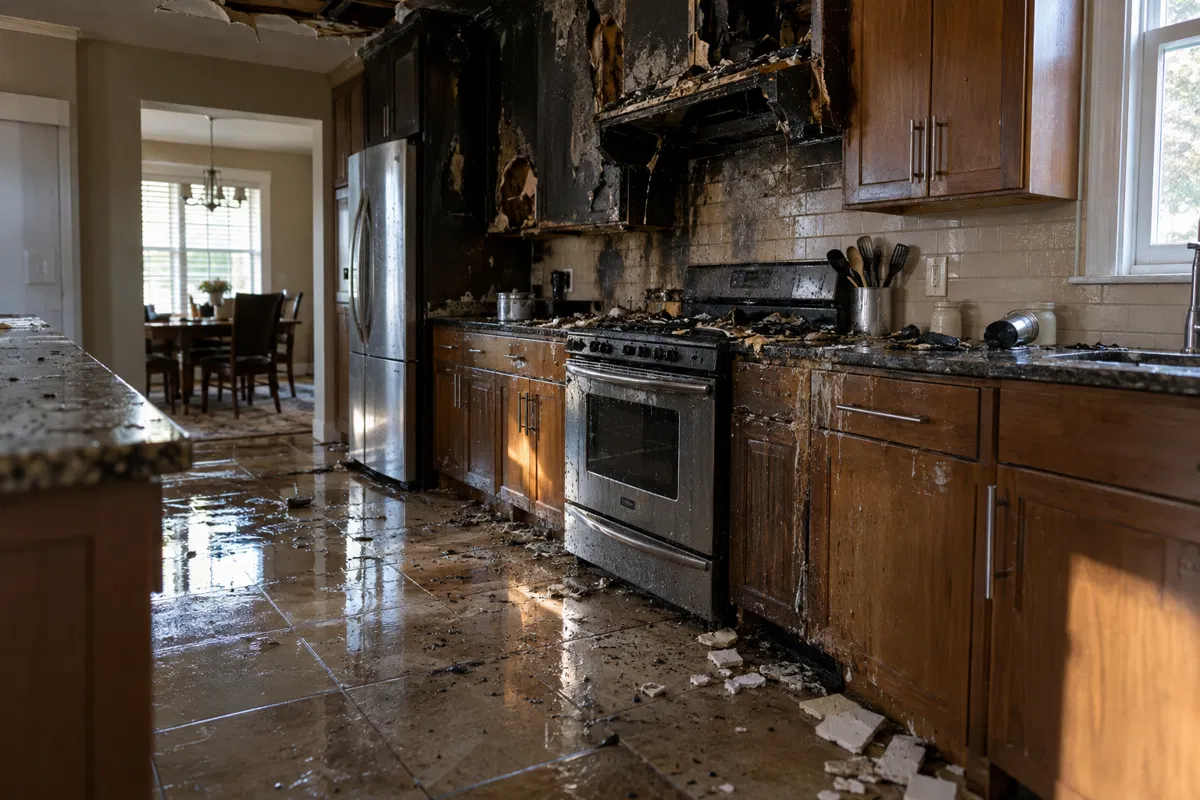
- Water can reach floors, ceiling cavities, and rooms beyond the burn area.
- The crew coordinates extraction and drying with residue and contamination controls.
Where the Water Comes From
Sprinklers, fire hoses, broken piping, roof openings, firefighting access, and emergency operations can introduce substantial water into a fire-damaged building.
Why Soot and Water Must Be Managed Together
Fire residue and water can interact in ways that change cleaning and drying decisions. Loose soot can smear when wetted, while wet porous materials can hold dissolved residues and odor deeper in the assembly. A fire-loss plan therefore has to coordinate residue removal with extraction and drying instead of treating them as unrelated jobs.
Where Hidden Moisture Commonly Travels After Firefighting
- Behind baseboards and wall finishes.
- Into insulation and wall or ceiling cavities.
- Under carpet, pad, resilient flooring, hardwood, and subfloor layers.
- Through stairwells, shafts, pipe chases, and penetrations between floors.
- Into cabinets, built-ins, closets, and contents stored below the fire area.
- Toward mechanical rooms, electrical equipment, and HVAC components.
Electrical and Structural Safety Comes Before Drying Equipment
Wet electrical equipment, energized wiring, damaged panels, compromised ceilings, and fire-weakened structural members can make normal restoration equipment unsafe to deploy. Qualified electrical, utility, structural, or fire-authority professionals may need to address those hazards before extraction or drying can proceed in a particular area.
Serve Xpert’s restoration role is to address the resulting property damage. Electrical repair, utility work, structural engineering, and other licensed-trade work remain separate disciplines when the loss requires them.
A Coordinated Fire-and-Water Restoration Sequence
- Document fire residue, water migration, safety hazards, and affected contents.
- Stabilize the structure and coordinate required utility or trade controls.
- Remove standing water where it is safe to do so.
- Identify materials that are unsalvageable because of heat, residue, contamination, or water damage.
- Establish the drying environment and track moisture in structural materials.
- Clean fire residue using methods that do not drive soot deeper into wet or porous surfaces.
- Evaluate HVAC and contents separately when the loss affected those systems or items.
- Address persistent odor after source residues and wet materials have been cleaned, dried, or removed.
Why Mold Can Become a Secondary Concern
A fire does not prevent mold growth. If suppression water remains in drywall, insulation, wood, flooring, or concealed cavities, those damp materials can develop microbial growth after the emergency fire response is over. The moisture condition should therefore be tracked until materials are dry or removed—not assumed to be resolved because the flames are out.
Documentation
Fire-loss documentation can distinguish heat damage, smoke/soot impact, suppression water, material removal, drying, contents handling, and specialty-trade needs.
What Property Owners Should Avoid
- Do not energize wet electrical equipment or appliances to test whether they still work.
- Do not run household fans across soot-covered wet surfaces without a restoration plan.
- Do not remove ceiling or wall materials beneath a water-loaded fire area if structural stability is uncertain.
- Do not assume that water appearing clean is automatically sanitary after it has moved through fire debris and building assemblies.
- Do not wait for odor treatment before addressing trapped water and wet materials.