
At a glance
What to know
- Trace the affected material and layers before choosing a treatment.
- Surface cleaning can help when the source is reachable and the material can be restored.
- Treating room air alone leaves odor reservoirs in untreated flooring, padding, or contents.
Why Porous Materials Hold Odor
Carpet, pad, unfinished wood, drywall paper, insulation, upholstery, concrete pores, grout, and other absorbent materials can hold liquids, residues, and odor-producing compounds below the visible surface. Pet urine, for example, can pass through carpet and pad into tack strips, baseboards, subfloor seams, lower wall surfaces, or cracks in concrete.
How Professionals Trace an Odor Problem
- Ask when the odor began, what event preceded it, whether it changes with weather or humidity, and whether it becomes stronger when the HVAC system operates.
- Inspect likely sources, concealed cavities, floor transitions, drains, contents, mechanical areas, and materials that can absorb contamination.
- Use moisture instruments when dampness, a prior leak, or microbial growth may be contributing.
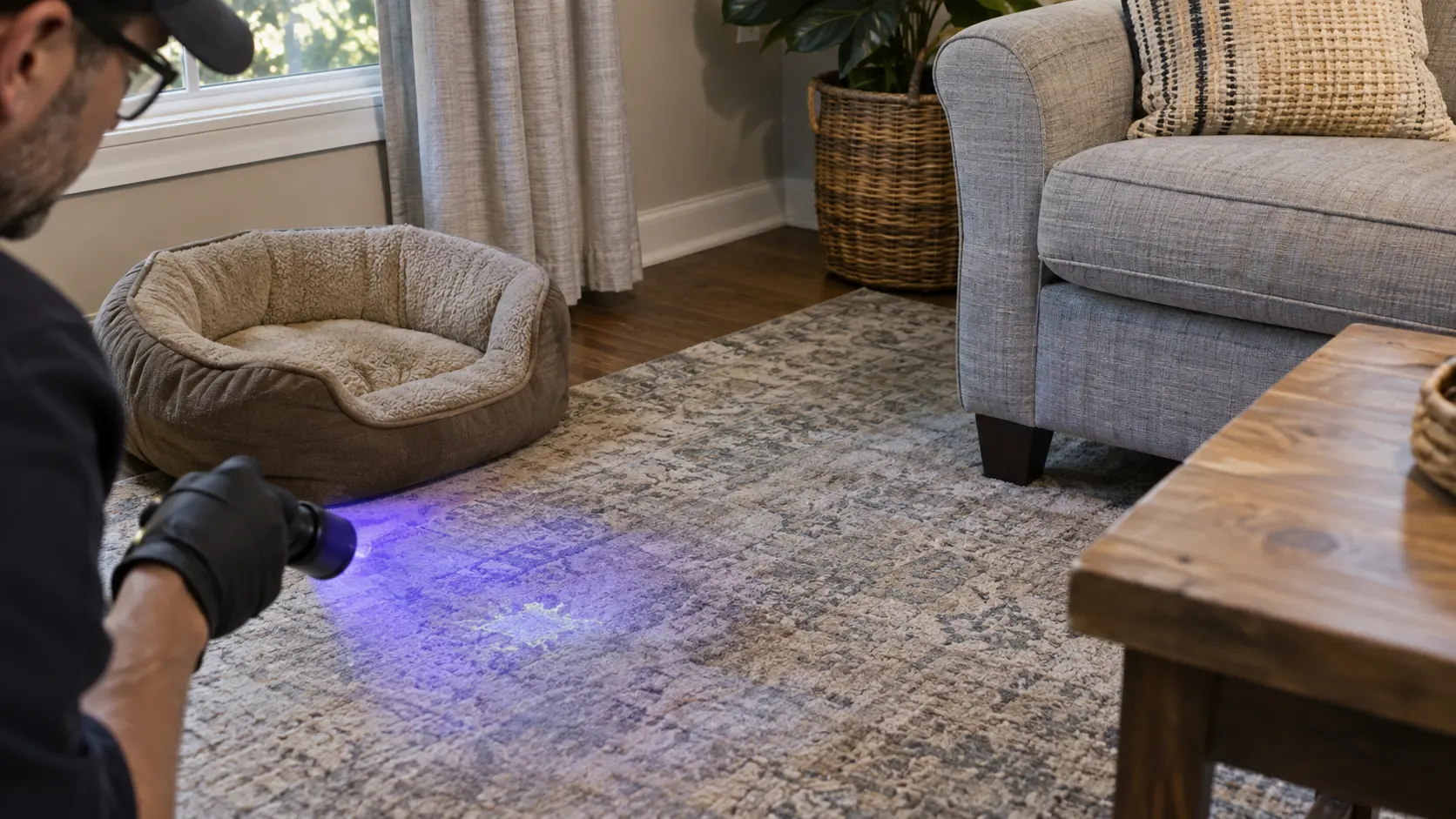
- Use specialty lighting or other detection tools only as an aid; a visual response does not by itself prove the exact contaminant or depth of penetration.
- Perform small cleaning or material tests before applying a broad treatment to sensitive surfaces.
Pet Urine Can Extend Below Finished Flooring
Repeated pet urine can affect more than carpet fibers. It may penetrate carpet backing, pad, tack strips, baseboards, wood flooring joints, grout lines, subflooring, concrete, or the lower portions of walls. Humidity or re-wetting can make residual odor more noticeable because moisture can re-activate compounds that remain in porous materials.
A durable plan evaluates each layer rather than assuming a surface shampoo reached the deepest source.
When Odor Is Connected to Water or Mold
A musty odor may be a clue to damp materials or microbial activity, but odor alone cannot identify mold species, contamination extent, or the exact moisture source. Water intrusion, condensation, drainage, or humidity conditions should be investigated rather than treating the smell as a standalone problem.
When HVAC or Contents Need Separate Evaluation
If odor becomes stronger when the heating or cooling system runs, or if smoke, water, mold debris, or another contaminant entered the air-distribution system, the HVAC system may need a post-loss assessment. Porous contents such as upholstered furniture, textiles, books, and stored items can also retain odor and may need individual restoration decisions.
What Property Owners Should Avoid
- Do not mix bleach, ammonia, acids, oxidizers, or other cleaning chemicals in an attempt to create a stronger odor treatment.
- Do not seal or paint over an active odor source before the contaminated or wet material beneath it is evaluated.
- Do not assume ozone, fogging, fragrance, or another air treatment replaces source removal and physical cleaning.
- Do not discard high-value or sentimental contents before considering whether a specialty restoration method is appropriate.
- Do not assume every persistent odor is biological; drains, combustion residues, damp materials, chemicals, pests, and mechanical systems can require different solutions.