At a glance
What to know
- CDC advises against sweeping or vacuuming rodent waste and nesting material because disturbance can put particles into the air.
- Pest control or exclusion addresses ongoing entry. Restoration addresses the affected surfaces, materials, and contents.
- Check concealed paths and porous layers before deciding what can be cleaned, retained, or removed.
Why Dry Sweeping or Vacuuming Rodent Waste Can Be Unsafe
Rodent droppings, nesting material, dried urine, and contaminated dust can break into small particles when they are swept, brushed, blown, or vacuumed dry. That disturbance can spread contaminated material through the breathing zone and into nearby rooms, HVAC pathways, or contents.
For light household conditions, public-health guidance emphasizes wetting and disinfecting rodent waste before removal rather than creating airborne dust. Heavy infestations, contaminated insulation, inaccessible voids, or large commercial conditions may require professional controls, personal protective equipment, and disposal planning.
Animal Waste Can Affect More Than the Visible Surface
Urine and feces can penetrate carpet, pad, wood, subfloor seams, insulation, cardboard, stored contents, and porous wall materials. A surface stain may be only the uppermost part of the contamination. The cleanup plan should follow the migration path and determine whether affected materials can be effectively cleaned or need removal.
Common Conditions Found With Animal or Rodent Contamination
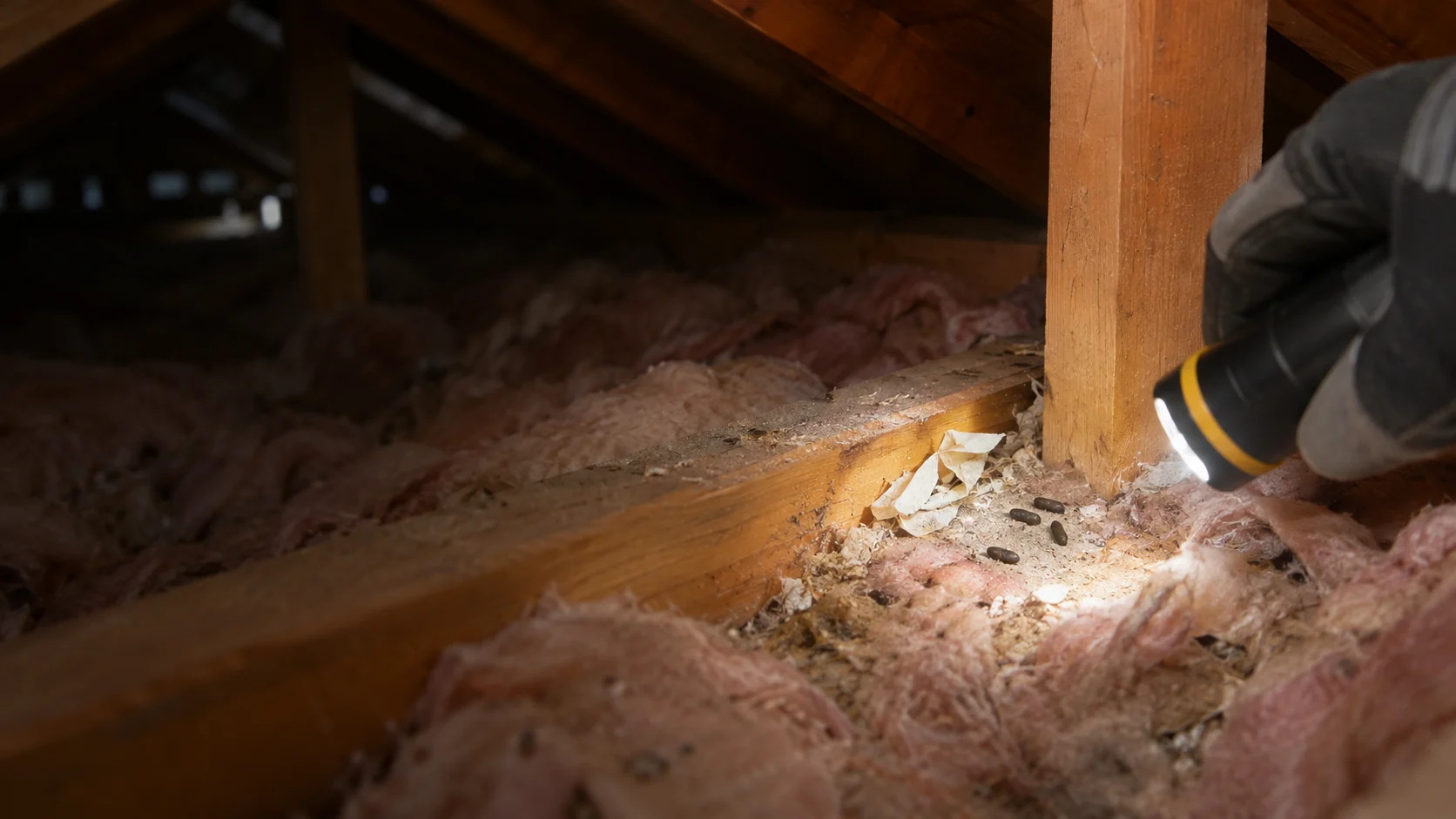
- Droppings and urine in attics, crawlspaces, garages, storage rooms, cabinets, wall voids, and mechanical areas.
- Nesting material mixed with insulation, paper, fabric, food debris, and building dust.
- Dead animals or decomposition residue producing persistent odor and insect activity.
- Fleas, ticks, mites, or other pest-related conditions that may require a licensed pest-control provider.
- Damaged vapor barriers, insulation, wiring, duct coverings, or stored contents.
- Openings that allow animals to re-enter after cleanup.
Why Pest Removal and Restoration Are Separate but Connected
Cleaning a contaminated attic or crawlspace without correcting the entry point can allow the problem to return. Pest trapping, exclusion, wildlife removal, and structural repairs may require a separate qualified provider. Restoration addresses contaminated materials, residues, odor sources, and affected building components after the animal activity is controlled.
A Professional Animal-Waste Cleanup Sequence
- Identify affected areas and determine whether animals are still active.
- Control access and establish personal protective equipment and work-area protection appropriate to the condition.
- Avoid unnecessary dry disturbance of droppings, nesting material, and contaminated dust.
- Remove gross contamination and unsalvageable porous materials in a controlled manner.
- Clean and disinfect restorable hard surfaces using products according to their labels.
- Address contaminated insulation, contents, subflooring, or hidden materials rather than cleaning only the visible surface.
- Remove the physical odor source before relying on deodorization methods.
- Document conditions that require pest-control, wildlife, HVAC, electrical, structural, or other specialists.
When Animal Waste Becomes a Biohazard-Level Condition
Not every pet accident or isolated dropping requires a biohazard remediation project. Risk and scope increase with heavy accumulation, widespread urine or feces, decomposition, sharps, human bodily fluids, sewage, significant pest infestation, or contamination of porous structural materials. Those conditions can require stronger access controls, personal protective equipment, controlled removal, specialized waste handling, or broader decontamination.
What Property Owners Should Avoid
- Do not use a leaf blower, compressed air, or a dry broom on accumulated droppings or nesting debris.
- Do not remove heavily contaminated insulation without considering airborne disturbance and hidden waste.
- Keep children, pets, and unprotected occupants out of heavily contaminated areas.
- Do not rely on fragrance or fogging instead of removing urine, feces, carcass residue, or contaminated porous materials.
- Do not seal an entry point until you are confident animals are no longer trapped inside the structure.