
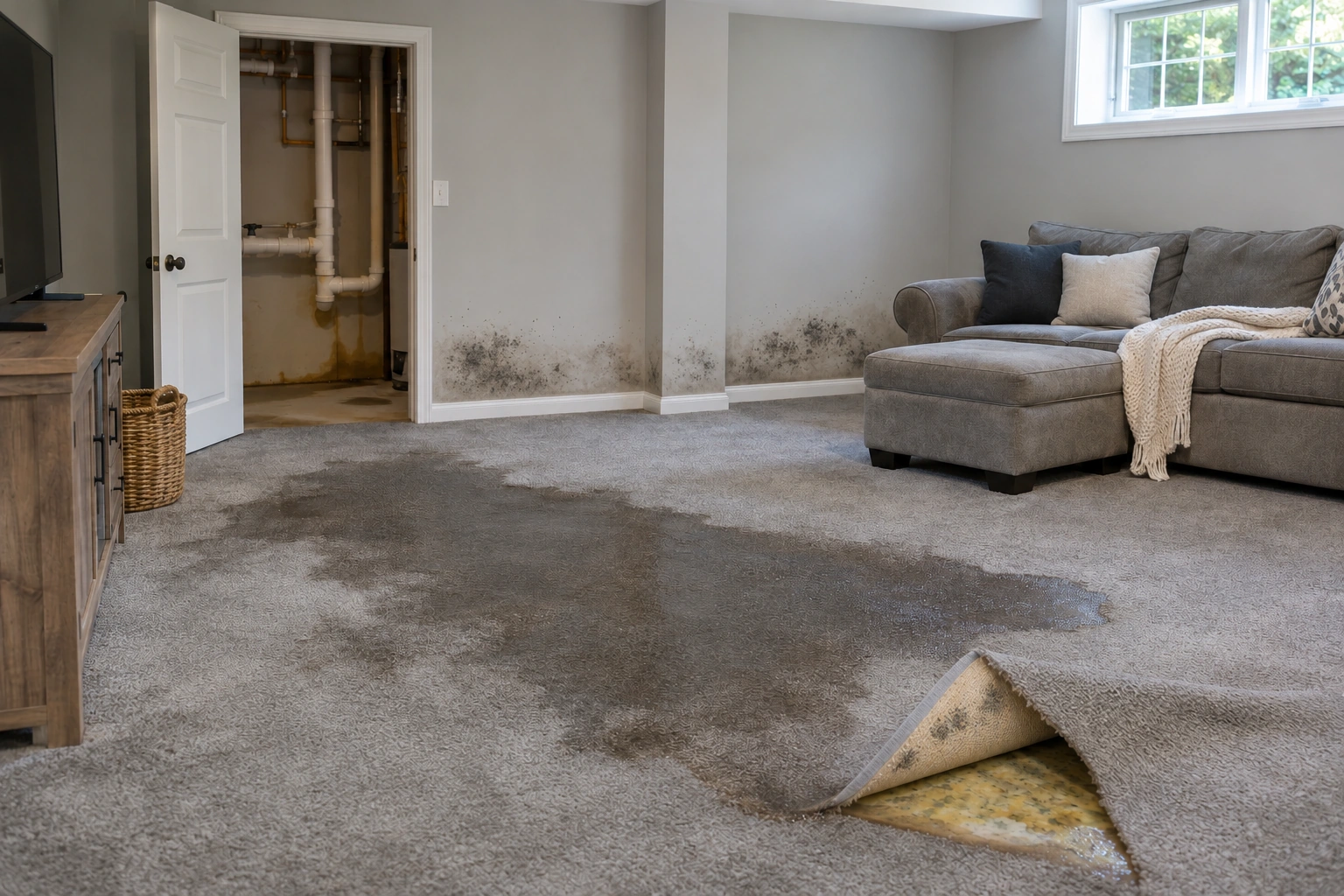
Compare the materials before the decision.
The face you can see and the layer behind it can require different actions. Choose a comparison to see what matters.
There is no universal “save or remove” rule.
What a material can tolerate depends on more than the product name.
What reached it?
The source and contamination of water or other residue influence whether cleaning and retention are suitable.
What is beneath it?
Underlayment, adhesive, cabinetry cores and concealed cavities may respond differently from the exposed surface.
Can we verify it?
Condition, access, manufacturer restrictions and supported measurements determine the feasibility of retention or removal.
What a good material decision includes
Restoration is neither automatic demolition nor automatic drying.
When controlled cleaning and drying fit
The component remains physically sound, its contamination and material behavior support retention, and the affected assembly can be accessed and checked using suitable methods.
When removal or a specialist is needed
There is nonrestorable swelling, contamination that cannot be addressed, structural compromise, inaccessible damaged layers or product limitations requiring a different approach.
Drying a material does not reverse delamination, prove disinfection, or verify a concealed assembly meets a future flooring installer’s requirements.
Explore deeper
Read material-specific context before making a property decision.
Helpful answers
A few questions that apply to these resources.
Do these diagrams tell me what is damaged in my home?
No. The examples show possible pathways or decision factors. A real assessment needs actual property access, observations and appropriate measurements.
Does Serve Xpert test or repair the source of the problem?
We assess accessible conditions and perform approved mitigation/remediation. Independent testing, system repairs and reconstruction are separately coordinated with the responsible qualified professionals.