
At a glance
Key takeaways
- A dry-looking finish does not establish that the subfloor is dry.
- Cupping and buckling describe different changes in the floor. Neither establishes the condition of the layers below.
- Drying, removal, and flooring repair are separate decisions. Moisture readings and the condition of the materials help guide each one.
What cupping and buckling can tell you
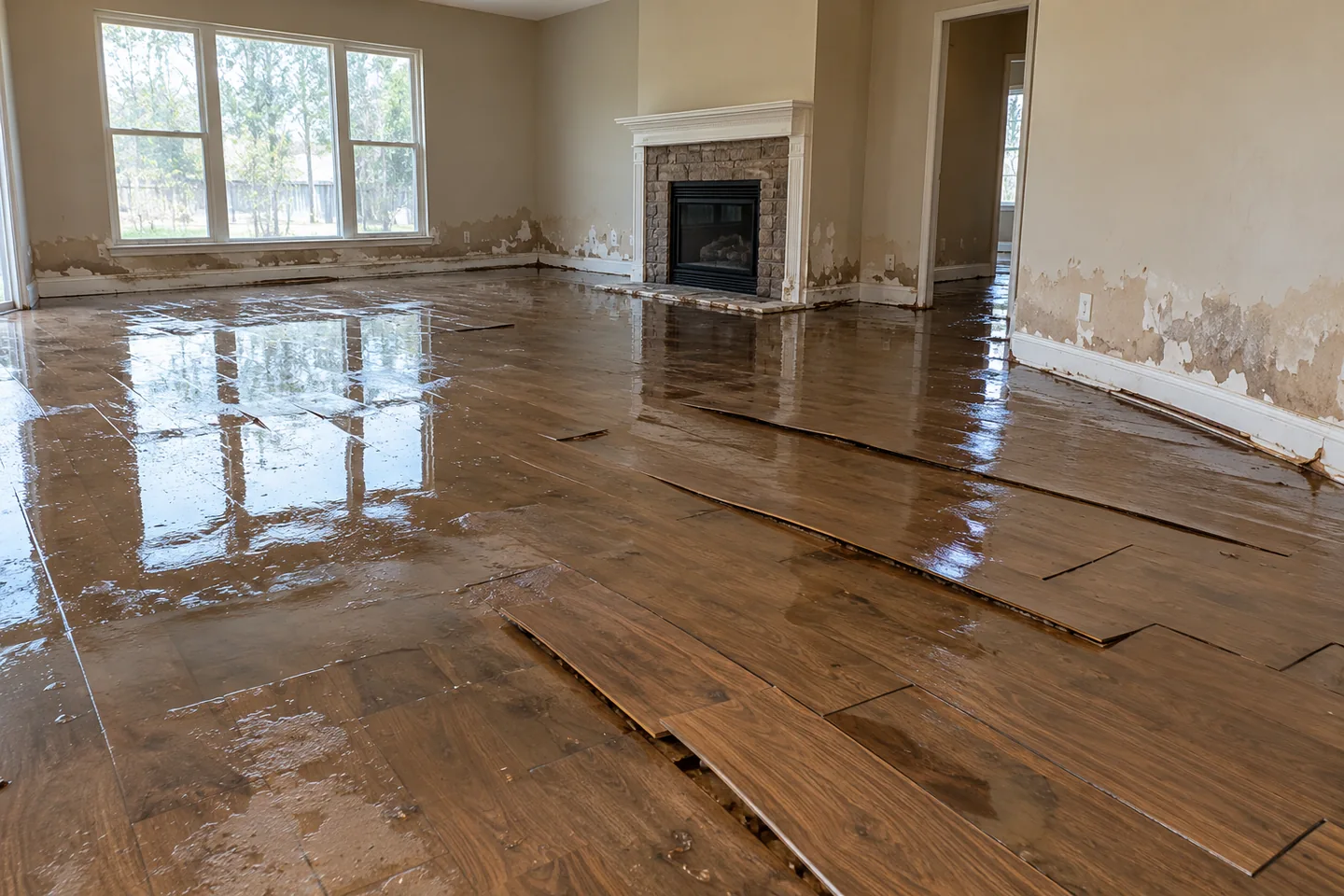
Cupping means the long edges of a board are higher than its center. It can develop when the underside of the wood holds more moisture than the face. Buckling means boards have lifted away from the layer below. Take photos of the affected area and note when each change appeared. The shape gives the assessor a clue, while readings and inspection help explain what is happening below.
Why the subfloor needs its own assessment
Water can pass between boards and collect along the edges of the room or in the layers under the finish floor. The subfloor is the layer that supports the finished flooring. Underlayment, adhesive, plywood or OSB, and concrete may also be part of the assembly. The materials and how the floor was installed affect where moisture can be checked and whether it can be dried in place. Read more about how water travels beyond the visible damage.
How we decide what can be dried or needs removal
Serve Xpert reviews the source, where the water traveled, and which materials it contacted. We use readings suited to the material at accessible points, compare them with appropriate references, and track how they change during drying. A suitable floor can sometimes stay in place when the affected layers are accessible for drying and the materials can be retained.
Removal may be needed when a layer cannot be adequately cleaned or dried, the floor has separated from its base, or the material has sustained damage that makes retention unsuitable. A flooring specialist can advise on whether the remaining boards can be repaired or need replacement. The structural drying guide explains how drying progress is checked.
What to show us when you request an assessment
Tell us when you found the water, whether the source has been addressed, and which rooms it reached. Share photos of lifted boards, open seams, wet baseboards, and any water marks on the ceiling below. If you know whether the floor is solid hardwood or engineered wood and how it was installed, share that too. An assessment can start with the information you have.
Plan flooring repairs after moisture conditions are verified
Before arranging sanding, refinishing, or installation of a new floor, have the moisture condition checked and share the drying records with your flooring contractor. Sanding while a floor is still cupped from moisture can leave an uneven surface as the boards dry. Serve Xpert handles mitigation and drying. Your flooring contractor can evaluate the appropriate repair or replacement after mitigation.