At a glance
What to know
- Keep exits and necessary access routes in view while planning the work.
- Agree on keep, review, and discard decisions with the person authorized to make them.
- Separate clutter removal, source cleanup, and odor control so the scope matches the conditions found.
Hoarding Cleanup Is Not Automatically a Biohazard Job
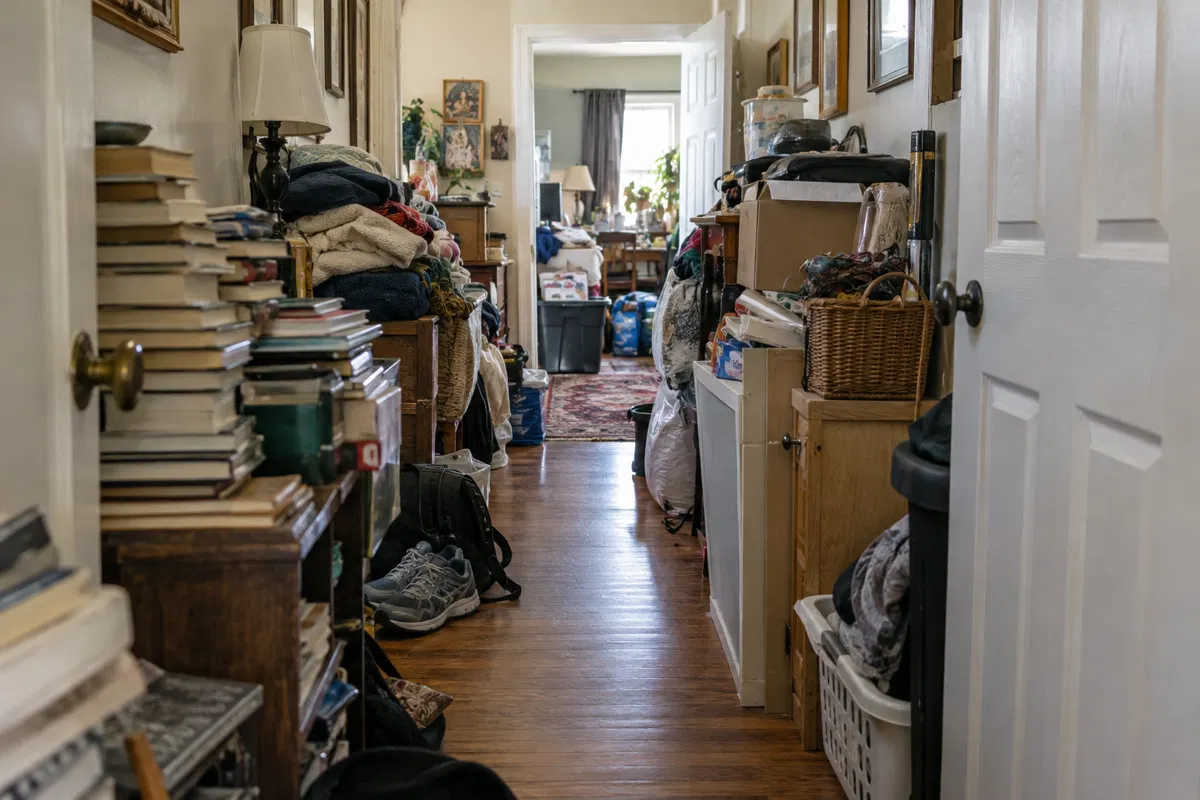
A cluttered property can be difficult to navigate without being biologically contaminated. Hoarding becomes a restoration or remediation concern when the accumulation is combined with conditions such as sewage, human or animal urine and feces, decomposed food, animal remains, sharps, pests, mold, water damage, bodily fluids, or other hazardous residues. The scope should be based on what is actually present—not on a label applied to the occupant or property.
Why Hoarding Conditions Can Multiply Restoration Hazards
- Blocked exits and narrow pathways can slow emergency access and make safe movement difficult.
- Concealed wet materials, damaged flooring, holes, pests, or sharps can be hidden beneath accumulated contents.
- Large amounts of combustible material can increase fire load and obstruct access to electrical equipment.
- Plumbing, roof, and appliance leaks may remain hidden long enough to create extensive moisture damage or mold growth.
- Animal waste, spoiled food, pest activity, and contaminated contents can create overlapping odor and sanitation problems.
- Blocked HVAC registers, mechanical equipment, electrical panels, or utilities can complicate inspection and restoration.
The First Step Is Triage, Not Throwing Everything Away
A controlled cleanup separates immediate hazards from ordinary clutter and distinguishes items that should be preserved, evaluated, cleaned, relocated, or discarded. Important documents, medications, valuables, photographs, legal papers, electronics, and sentimental property should not be mixed into bulk disposal simply because a room is heavily cluttered.
Useful Triage Categories
- Keep in place when the item is safe and does not obstruct the work.
- Pack out or relocate to create access and protect the item.
- Clean or restore using a method appropriate to the material and contamination.
- Refer to a specialty vendor for electronics, documents, art, textiles, or other sensitive contents when appropriate.
- Dispose when contamination or physical damage makes restoration impractical, or when the authorized decision-maker elects disposal.
Respect, Privacy, and Decision-Making Matter
Hoarding cleanup can expose private records, financial documents, photographs, medications, personal correspondence, and valuable property. Before large-scale removal begins, the project should identify who is authorized to make decisions, what categories of property require special handling, and how privacy will be protected throughout the work.
When Biohazard Controls May Be Needed
Human or animal waste, decomposition, blood or OPIM, sewage, sharps, significant pest contamination, or heavily contaminated porous materials can require restricted access, personal protective equipment, controlled removal, cleaning and disinfection, or specialized waste handling. Those controls may apply to specific rooms or zones rather than automatically to the entire property.
A Structured Hoarding-Cleanup Workflow
- Identify the authorized decision-makers, project goals, restricted areas, and immediate safety concerns.
- Create safe access paths before broad sorting or removal begins.
- Separate valuables, documents, medications, and sentimental items from ordinary debris.
- Inspect for hidden water damage, mold, pests, biohazards, fire hazards, and structural or electrical concerns.
- Remove debris and contaminated materials using controls appropriate to each zone.
- Clean and deodorize only after the physical sources of soil and odor have been addressed.
- Coordinate pest-control, plumbing, electrical, HVAC, structural, or other specialists when the property conditions require them.
- Document the work completed, items handled, and any remaining conditions outside the restoration scope.
What Property Owners Should Know About Odor
A heavily cluttered property can contain several odor sources at once. Pet urine, spoiled food, drains, damp materials, mold, tobacco residue, pests, and decomposed organic material may all contribute. Fragrance can mask an odor temporarily, but durable odor correction depends on finding and addressing the underlying sources.