At a glance
What to know
- Avoid disturbing accumulations. CDC identifies disturbing contaminated soil or large bird or bat waste deposits as an exposure concern.
- Arrange appropriate wildlife exclusion separately from restoration of affected materials.
- Assess insulation, reachable surfaces, contents, and air pathways before setting the cleanup scope.
Not Every Dropping Creates the Same Condition
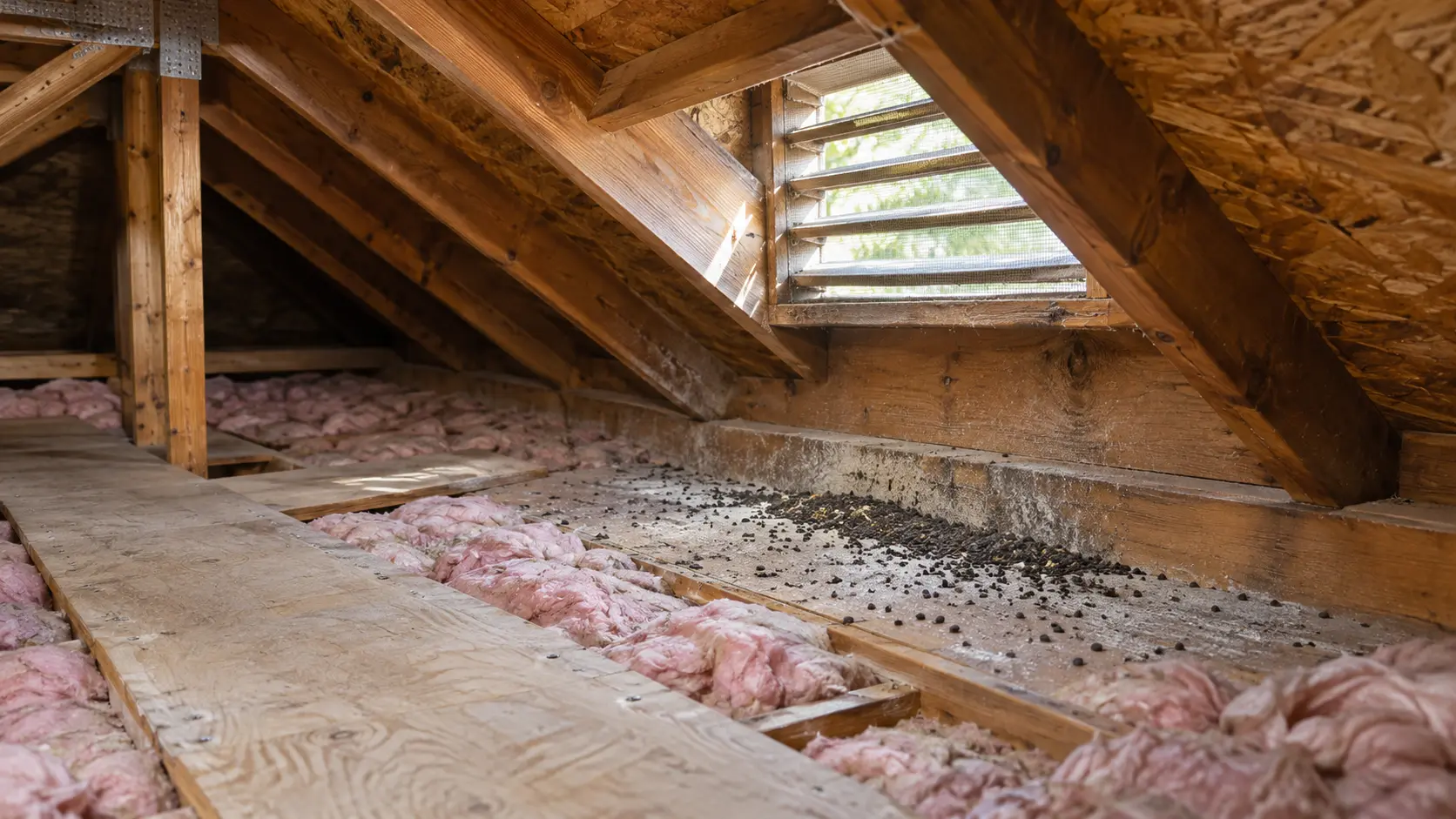
An isolated fresh dropping on an outdoor surface is not the same as years of accumulated waste inside an attic, chimney, crawlspace, barn, warehouse, church tower, abandoned building or mechanical area. The cleanup plan depends on:
- How much material is present
- Whether it is dry, dusty, wet or mixed with nesting debris
- Whether people must disturb it to enter or work in the area
- Ventilation and air pathways
- Affected insulation, wood, drywall, flooring and contents
- Whether birds or bats are still active
- Whether the area connects to occupied rooms or HVAC equipment
- Whether odors, insects, moisture or additional animal waste are present
The goal is not to label every condition as a major biohazard. The goal is to recognize when a simple cleaning method could spread the problem.
Why Dry Disturbance Can Increase Exposure
Droppings, guano, nesting material and contaminated dust can break into smaller particles when swept, shoveled, brushed, blown with compressed air, disturbed during insulation removal or vacuumed with inappropriate equipment. Fine material can enter the breathing zone, settle on nearby contents or move through connected air pathways.
Professional planning may include access control, dust suppression, containment, appropriate respiratory and skin protection, HEPA-filtered equipment, controlled removal, cleaning of remaining surfaces and disposal coordination. The level of control should match the actual condition.
Histoplasma and Bird/Bat-Dropping Environments
Histoplasma is an environmental fungus that can grow especially well in soil or other organic material enriched by large amounts of bird or bat droppings. People can become ill after breathing airborne spores when contaminated material or soil is disturbed.
The presence of birds, bats or droppings does not prove that Histoplasma is present, and a restoration contractor cannot diagnose histoplasmosis or determine a person’s medical risk. The practical restoration approach is to treat significant dusty accumulations cautiously, avoid unnecessary aerosolization and use condition-appropriate controls.
Large accumulations, demolition around old roosts, contaminated soil, caves, attics, chimneys and abandoned structures can present a different risk than a few fresh droppings on an exterior surface.
Where Bird and Bat Waste Can Affect a Building
Common locations can include:
View details
- Attics and roof cavities
- Chimneys, flues and fireplaces
- Eaves, soffits and roof overhangs
- Crawlspaces and wall voids
- Garages, barns and sheds
- Warehouses and industrial spaces
- Churches, towers and high interior ledges
- Vacant or abandoned buildings
- Mechanical rooms and areas near ductwork
- Stored contents, boxes and shelving beneath a roost
Droppings may be mixed with feathers, nesting material, insects, carcass remains, damaged insulation, dust, soil and moisture. Each material has a different cleaning or removal decision.
Contaminated Insulation and Porous Materials
Fiberglass, cellulose and other insulation can trap droppings, urine, nesting material, dust and odor. Drywall, unfinished wood, cardboard, fabrics and stored contents may also hold contamination below the visible surface.
Surface cleaning may not be enough when waste is embedded throughout insulation or other absorbent material. The plan may include controlled removal, bagging, disposal coordination, HEPA cleaning of remaining structural surfaces and documentation of areas that require repair or replacement.
HVAC and Air-Pathway Considerations
A bird or bat condition does not automatically mean every duct must be cleaned. HVAC evaluation becomes more important when:
- Droppings, dust or nesting material entered a return, supply or equipment cabinet
- Contaminated insulation is adjacent to open ductwork or air-handling components
- The system was operating while dusty material was disturbed
- Air pressure or openings connect the affected attic or cavity to occupied spaces
- Persistent odor or visible debris is present near registers or equipment
Changing a filter alone does not correct a source in insulation, a wall cavity or an active roost. The HVAC decision should be coordinated with source control and structural cleanup.
Wildlife Removal and Restoration Are Different Services
Cleaning the property while birds or bats can still enter may allow the condition to return. Wildlife removal, trapping, exclusion, permits and sealing entry points may require a qualified wildlife or pest-control provider.
The sequence matters. Animals should not be trapped inside the building, and protected species or seasonal restrictions may affect timing. Serve Xpert’s restoration role focuses on contaminated materials, residues, dust, odor sources, affected contents and building components after active animal access is controlled or appropriately coordinated.
What a Professional Evaluation May Include
A professional review may consider:
View details
- Animal type and whether activity is current
- Location and estimated amount of waste
- Access, fall and confined-space conditions
- Dust and aerosolization potential
- Occupancy and sensitive individuals
- Insulation and porous-material involvement
- HVAC openings and air pathways
- Contents beneath or near the affected area
- Moisture, mold, insects, carcass material and odor
- Electrical wiring, damaged building components and fire hazards
- Containment, PPE and equipment needs
- Wildlife, pest-control, structural or other outside-provider needs
- Waste handling and disposal requirements
- Photo documentation and scope boundaries
What Property Owners Should Do
- Keep children, pets and unnecessary occupants away from significant accumulations.
- Avoid disturbing dry droppings or nesting material.
- Photograph visible conditions from a safe location when practical.
- Tell Serve Xpert whether birds or bats are still active.
- Identify nearby HVAC equipment, stored contents, wiring and access limitations.
- Contact the appropriate wildlife or pest-control provider when exclusion or animal removal is needed.
- Seek medical advice from a healthcare professional if someone has health concerns after a possible exposure.
What Property Owners Should Avoid
- Do not use a leaf blower, compressed air or dry broom on accumulated waste.
- Do not use an ordinary household vacuum or unfiltered shop vacuum.
- Do not remove heavily contaminated insulation without considering dust, access and hidden waste.
- Do not seal animals inside the building.
- Do not rely on fragrance, fogging or surface spray instead of source removal.
- Do not move contaminated boxes or contents through clean rooms without a plan.
- Do not assume a disease organism is present—or absent—based on appearance.
- Do not ask a restoration contractor to provide medical diagnosis or clearance.
Frequently Asked Questions
Does every bird or bat dropping contain Histoplasma?
No. Bird or bat droppings do not prove that Histoplasma is present. Risk increases in certain environments with large accumulations, contaminated soil or organic material, and disturbance that creates airborne dust. Professional controls are based on the condition rather than an assumption that every dropping contains the fungus.
Is one bird dropping on a windowsill a biohazard emergency?
Usually, an isolated fresh exterior dropping is not the same condition as a large attic or roost accumulation. Location, amount, dryness, access, occupancy and the material beneath it determine the appropriate response.
Can I vacuum bat guano with a shop vacuum?
Ordinary shop vacuums can spread fine particles or contaminate the equipment. Significant guano accumulation should be evaluated before vacuuming or sweeping. Professional systems use filtration and controls selected for the condition.
Does cleaning the droppings remove the bats or birds?
No. Cleanup and wildlife exclusion are separate but connected services. A qualified provider may need to remove animals and correct entry points before or alongside restoration work.
Does the entire attic insulation always have to be removed?
Not automatically. The decision depends on how widely waste, urine, nesting material, dust and odor have affected the insulation; whether clean separation is possible; access; and the condition of the underlying materials.
Can Serve Xpert test me or the building for histoplasmosis?
Serve Xpert does not diagnose illness, test people or provide medical clearance. Environmental testing for Histoplasma is a specialized question and is not routinely used as a substitute for hazard controls and physical cleanup. Customers with health concerns should contact a healthcare professional.
Can deodorizing alone fix the problem?
No. Lasting odor control begins with removing droppings, nesting material, carcass residue, urine-affected material and other physical sources. Deodorization may support the project after source removal and cleaning.