At a glance
What to know
- Cleaning, sanitizing, and disinfecting have distinct purposes and conditions of use.
- Visible soil, absorbent materials, sharps, and sewage can change the plan beyond surface treatment.
- Ask which areas and materials are in scope and how the work will be documented.
Cleaning, Sanitizing, Disinfecting, and Remediation Are Different Actions
These terms describe different goals. Cleaning physically removes soil and organic matter. Sanitizing reduces microorganisms to a level defined by the applicable product or public-health use. Disinfecting uses an EPA-registered product against specified microorganisms on specified surfaces when the label directions are followed. Remediation goes further when the problem includes a contamination source, affected porous materials, fluid migration, sharps, decomposition, sewage, or another condition that cannot be addressed by surface disinfection alone.
Why Cleaning Comes Before Disinfection
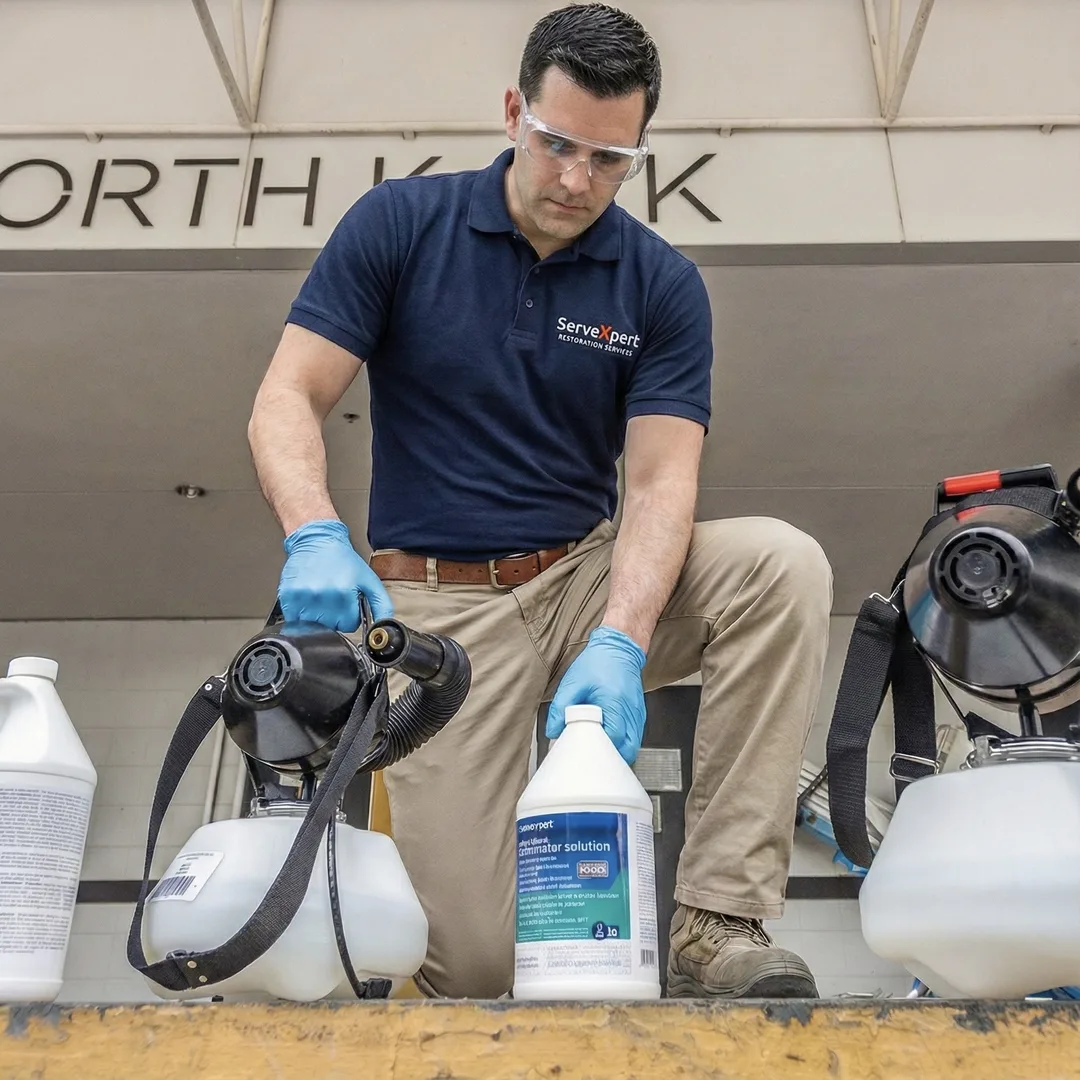
Dirt, grease, dust, blood, body fluids, and other organic matter can interfere with a disinfectant's ability to contact the surface. A professional process therefore considers gross soil removal, cleaning, product compatibility, required wet contact time, and cross-contamination control rather than simply spraying a chemical and immediately wiping it away.
Product Labels Matter
Disinfectants are not interchangeable. The product label identifies the organisms or claims for which the product is registered, compatible surfaces, dilution or ready-to-use instructions, application method, required contact time, PPE or ventilation precautions, and other restrictions. More chemical is not automatically better, and mixing cleaning or disinfecting products can create dangerous reactions.
When a Cleaning Project Becomes a Biohazard Project
A project may require biohazard controls when there is blood or OPIM, human bodily fluids, decomposition, sewage, contaminated sharps, heavy animal waste, or biological material that has migrated beneath or into building finishes. The presence of a source that must be removed changes the work from routine surface hygiene to contamination control and remediation.
Porous Materials Change the Decision
Drywall, carpet cushion, insulation, unfinished wood, mattresses, upholstered materials, and other porous items can absorb fluids or contamination below the accessible surface. Surface disinfection cannot be assumed to reach internal layers. The decision to clean, remove, or refer an item for specialty treatment depends on the contaminant, material, depth of penetration, ability to access the affected area, and applicable requirements.
Sharps Require Their Own Safety Controls
Needles, lancets, broken glass, and other sharp objects can create puncture and exposure hazards. They should not be hand-picked from mixed debris or compacted into ordinary trash. The cleanup plan should account for safe identification, handling, puncture-resistant containers where applicable, and the relevant disposal requirements.
Sewage Is More Than a Disinfection Problem
A sewage backup can spread water, organic matter, microorganisms, and debris into flooring, wall cavities, contents, and other materials. Professional cleanup focuses on stopping the source, controlling access, removing gross contamination, evaluating affected porous materials, cleaning remaining surfaces, drying the structure, and using appropriate antimicrobial or disinfectant products where they are suitable. Spraying disinfectant over sewage residue is not a complete remediation process.
Cross-Contamination Control
Cleaning should move in a deliberate sequence so tools, gloves, footwear, wipes, equipment, and debris do not carry contamination into clean areas. Depending on the project, this can involve work zones, controlled entry and exit, dedicated tools, disposable materials, containment, HEPA filtration, or other engineering and administrative controls.
What Customers Should Ask Before Hiring a Cleaning or Biohazard Company
- What is the actual contamination source?
- Is this routine cleaning, targeted disinfection, or remediation?
- Are porous materials affected beneath the visible surface?
- What controls will prevent cross-contamination?
- What product is being used, and is it appropriate for the target surface and intended use?
- How will sharps or regulated waste be handled if encountered?
- What documentation will be provided when the work is complete?