
Growth around a bathroom or vanity
A slow drain leak can keep the cabinet base wet, while repeated condensation may affect the walls or ceiling. Describe where growth comes back and whether it changes after the room is used.
Serve Xpert
Request an assessment if visible growth or a musty odor keeps returning in a Towson or Baltimore County property. Tell us which materials are affected and what has already been done about the moisture.
Service area
Check your property’s location before requesting service.
Communities in our service area include Towson, Catonsville, Dundalk, Parkville, White Marsh, Owings Mills, Hunt Valley, Pikesville, Essex, Reisterstown, and Cockeysville. We review the property address, access, and urgency to confirm availability.
Explore all Baltimore County services · See our full mold remediation service
A slow drain leak can keep the cabinet base wet, while repeated condensation may affect the walls or ceiling. Describe where growth comes back and whether it changes after the room is used.
If staining is close to a common plumbing wall, ask the building manager about leaks or repairs in the adjoining unit. That history helps narrow where to check.
Wall bases, stored boxes, and flooring edges can show where dampness is concentrated. Note any prior seepage, sump issues, or recent drying work.
Share whether the odor is strongest near a condensate line, a drain pan, or a wall behind equipment. A qualified HVAC or plumbing trade can address a faulty system if needed.
Review what changed before the growth appeared
We review the location, affected materials, and accessible moisture conditions. Share any leak repair or water mitigation record so the assessment can focus on the remaining problem.
Set the work area and cleaning scope
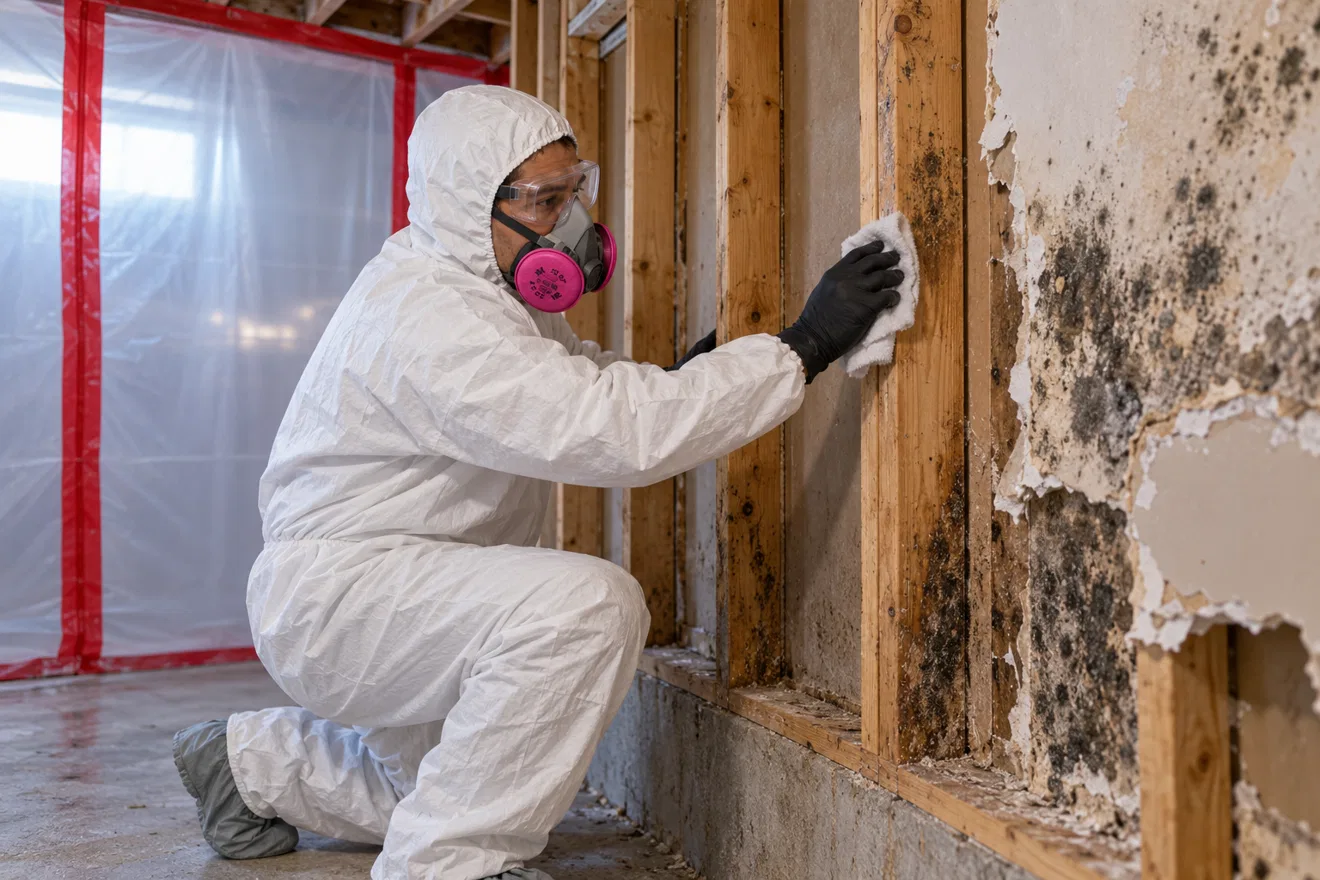
We select containment, HEPA filtration, cleaning, and affected material removal based on the extent and the surfaces involved. In occupied buildings, we coordinate access with the person responsible for the space.
Document completed work and open moisture issues
We review the work area and identify any source correction that still needs a separate trade. If your project requires sampling or independent clearance, arrange it with an independent provider.
A resident may see growth on one side of a wall while the building manager has the repair record for the pipe behind it. Bring both sets of information to the assessment. Include the dates of prior leaks or cleaning and identify the contact who can authorize access.
For recurring growth, a lasting result depends on identifying and correcting the moisture source. Share which repairs are complete and which still need a plumber, roofer, HVAC technician, or other trade.
Yes. Share how soon the condition returned and whether the area was exposed to new water or condensation. Those details help guide moisture checks and the remediation scope.
Serve Xpert assesses the work area and performs remediation. An independent mold assessor can handle sampling or lab analysis if it is part of your project.
Send the unit number, the affected rooms, dates of previous leaks or repairs, and the building contact who can coordinate access.
Restoration Resource Center
Learn more about assessing damage, planning cleanup, and what to share when you request service.
Learn how water moves under floors and behind walls, which clues warrant a closer look, and how a crew checks for concealed moisture.
Compare a visual mold assessment, independent sampling, remediation, and post-remediation verification so you can choose the right next step.
See how work-area isolation, filtered airflow, and removal or detailed cleaning of affected materials work together during mold remediation.
Share the property address, the affected areas, and what has happened so far. For an active emergency, call (888) 338-0519.
For assistance with this request, call (888) 338-0519.