Serve Xpert Restoration Services

Restoration methods

Recognizing Signs of Property Damage

Compare illustrated examples of water, mold-like deposits, smoke residue and material changes. Learn what is visible—and what still needs to be investigated.

ILLUSTRATED DAMAGE SIGNS

What is visible—and what is still unknown.

Choose a category to compare ordinary changes in materials. The site explains why an experienced inspection starts with evidence, not a dramatic guess.

Illustrations, not diagnoses.

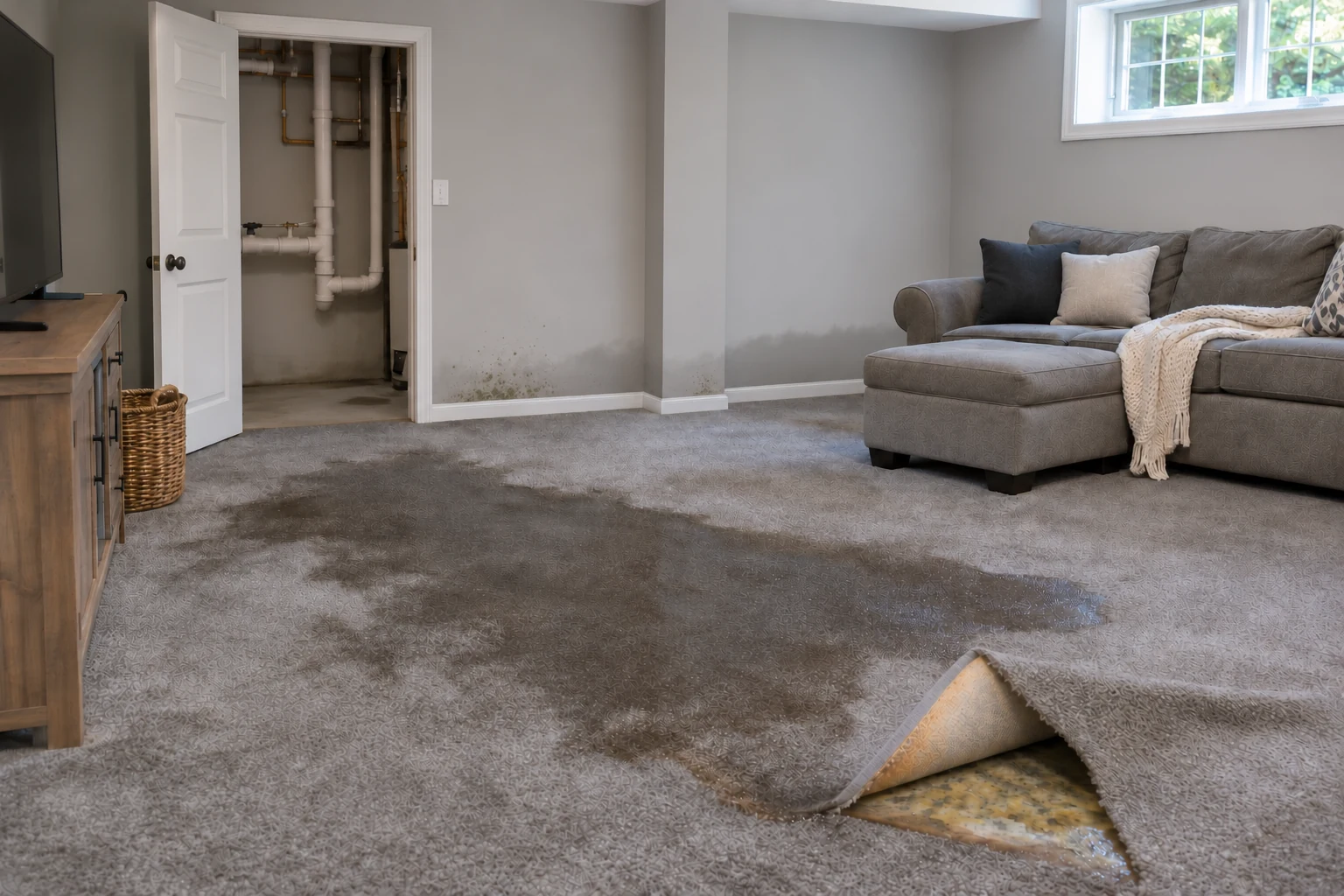
The panels are original schematic drawings. They are not customer job photos, laboratory identification or measured evidence. Similar-looking conditions can have different causes.

Water & moisture

Discoloration on a ceiling

What you can observe

A stain can follow an overhead leak, condensation or earlier moisture event.

What it does not prove

It cannot locate the precise source or establish a still-wet ceiling cavity.

A responsible next step

Check current moisture and the reported history; restrict access if the ceiling is sagging.

Walls & finishes

Paint bubbling or peeling

What you can observe

Water or heat can weaken the coating bond; some finishes trap moisture behind a dry-looking face.

What it does not prove

A bubble alone does not prove an active leak or mold behind the paint.

A responsible next step

Document size and pattern; evaluate the finish, backing and source before disturbing suspect legacy coatings.

Floors & subfloors

Hardwood floor cupping

What you can observe

Uneven moisture through the wood thickness can create raised board edges.

What it does not prove

Cupping does not prove rot or that sanding will correct it while moisture is still changing.

A responsible next step

Compare floor and subfloor conditions and stabilize moisture before flooring decisions.

Floors & furnishings

Laminate or MDF edge swelling

What you can observe

Moisture can enter seams and swell a fiber-based core beyond the visible finish.

What it does not prove

A dry top face does not prove the joint or core is recoverable.

A responsible next step

Identify the product, check edges/underlayment and inspect actual material integrity.

Masonry & basements

White mineral deposits on masonry

What you can observe

Dissolved salts can move with water and crystallize as the masonry surface dries.

What it does not prove

White residue is not automatically mold; nor does it establish the entry path.

A responsible next step

Look for repeat wetting, deposits, coatings and source evidence; confirm identity before treatment.

Windows & condensation

Water droplets at windows

What you can observe

A cold surface can collect moisture when its temperature reaches the surrounding air’s dew point.

What it does not prove

Droplets do not establish a window installation defect or a specific mold organism.

A responsible next step

Compare temperatures, humidity, air movement and any signs of rain-entry defects.

Fire & smoke

Dark film after a fire

What you can observe

Smoke particles and residues can deposit on walls, ceilings, contents and HVAC-adjacent surfaces.

What it does not prove

Dark deposits are not all the same chemistry and do not establish structural fire damage.

A responsible next step

Document the residue pattern and affected materials. A qualified professional can evaluate the condition before choosing a compatible cleaning test or repair.

Wet areas

Dark speckles along a grout joint

What you can observe

Organic residue, deposits and some fungal growth can collect on repeatedly damp surfaces.

What it does not prove

Color and appearance cannot identify genus or prove concealed wall damage.

A responsible next step

Inspect the source, grout/sealant condition and any adjacent softened materials.

Walls & ceilings

Wet or matted insulation

What you can observe

Water can compress fiber, dampen a paper facer or conceal wet framing.

What it does not prove

Insulation types differ; a nearby wood-meter reading is not a validated insulation moisture percentage.

A responsible next step

Identify insulation type, contaminated layers and access/drying feasibility.

Walls & systems

Rust or corrosion on metal track

What you can observe

Water, salts or certain residues can corrode steel tracks, connectors and fasteners.

What it does not prove

A rust mark alone does not measure structural capacity or prove a mold problem.

A responsible next step

Document component, connection condition, moisture source and structural concerns for qualified review.

HOW PROFESSIONAL REVIEW WORKS

Look beyond the visible surface.

A stained ceiling, damp masonry or raised floor edge can be the visible end of a much larger or older path. That does not mean hidden damage should be presumed.

Identify

Name the actual material, observed changes and what access is available.

Compare

Use the suitable instrument and the same material/reference where meaningful.

Scope carefully

Recommend cleaning, access, drying, removal or outside-trade referral from supported findings.

Serve Xpert Chat

Hi. What happened at the property? I can help with next steps, coverage, or financing. For urgent damage, call (888) 338-0519.

Automated chat. Keep personal and payment details out of messages.

Call NowRequest service