
At a glance
Key takeaways
- Black patches do not establish a species or medical risk.
- Water-damaged cellulose material is the central building clue.
- Cleanup and material decisions come before cosmetic coverups.
Using the report with the wall inspection
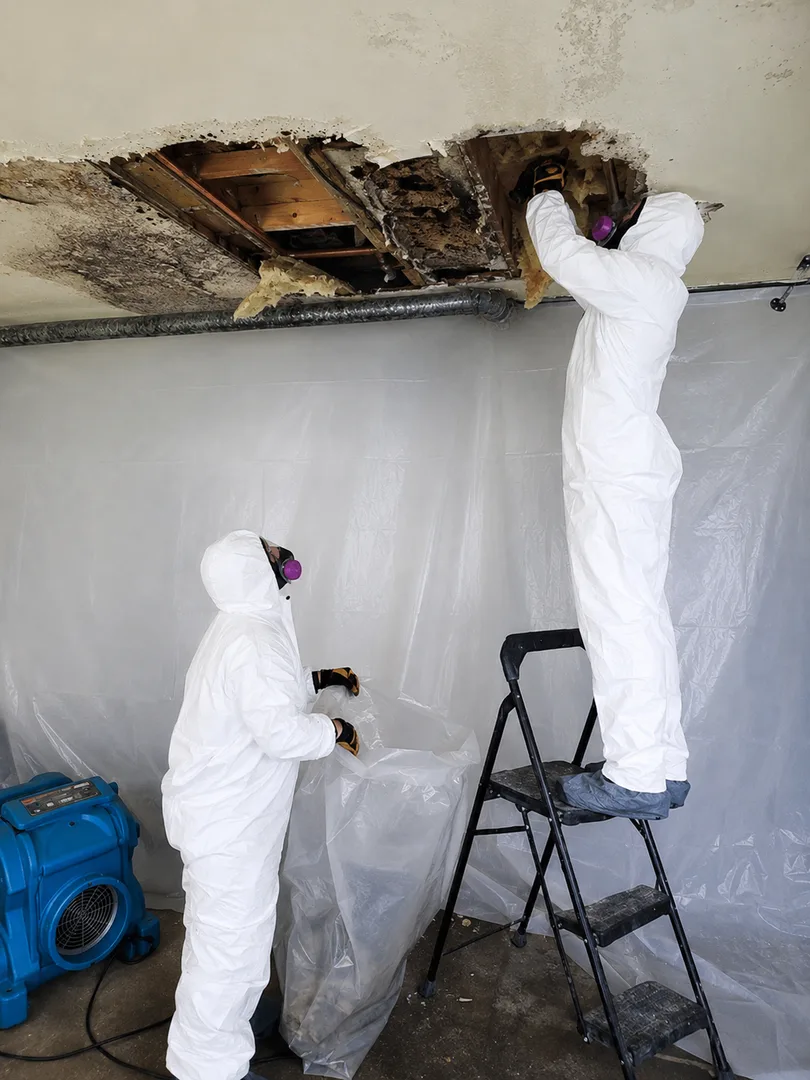
The words “black mold” can sound alarming, especially after a ceiling leak or a dark mark behind a cabinet. But a dark patch may be caused by several molds, residue or staining. The correct first step is to document wetting and material condition rather than name an organism by sight.
What if the surface was painted after the leak?
We look for evidence at accessible sheet edges, trim and adjoining finishes. The plan identifies damaged porous material, surfaces that can be cleaned and the moisture source that needs attention before the wall is closed.
What to examine around a previously wet wall
- Paper-faced gypsum board. Water-intrusion damage may support growth on the paper layer when moisture persists.
- Ceiling and wall cavities. Leaks can leave hidden paper-faced material wet after the visible face dries.
- Fiberboard and other cellulose-rich products. Absorbent products can retain water; physical deterioration affects salvage decisions.
Helpful answers
Frequently asked questions
Is every black mold stain Stachybotrys?
No. Many fungi and ordinary staining can be dark. Proper laboratory analysis is needed when identifying the organism matters.
Can Stachybotrys be hidden behind drywall?
Growth can occur on suitable wet cellulose material inside an assembly. Inspection and moisture evidence determine whether concealed access is needed.