
Low-Slope Roof Membranes after water, smoke or contamination
A low-slope roof may have TPO/PVC/EPDM single-ply sheet, modified-bitumen or built-up asphalt membrane, seams/flashing, adhesive/fasteners, a gypsum-fiber or cement cover board, rigid foam/mineral wool insulation, a vapor-control layer and metal/wood/concrete deck. An exposed membrane can look relatively intact despite saturated insulation from an open seam, blocked drain, puncture, parapet failure or concealed leak. Moisture migration over a roof deck can place interior ceiling water far from the initiating breach.
What the inspection covers
USG markets product-specific gypsum-fiber cover boards with enhanced water resistance and separately cementitious roof boards that resist rot in water; these properties do not grant permanent water retention approval to all gypsum/roof products. GAF's roofing/coating guidance calls for identifying and REPLACING wet insulation and membrane as part of its specified renovation systems, with an appropriate moisture survey. These are manufacturer's roof-system requirements, not an automatic restoration-crew order to remove every suspect square foot. A relative roof scan or thermal anomaly cannot assign 'roof insulation MC%' or independently prove saturation without qualified interpretation.
Cleaning, drying and specialist work
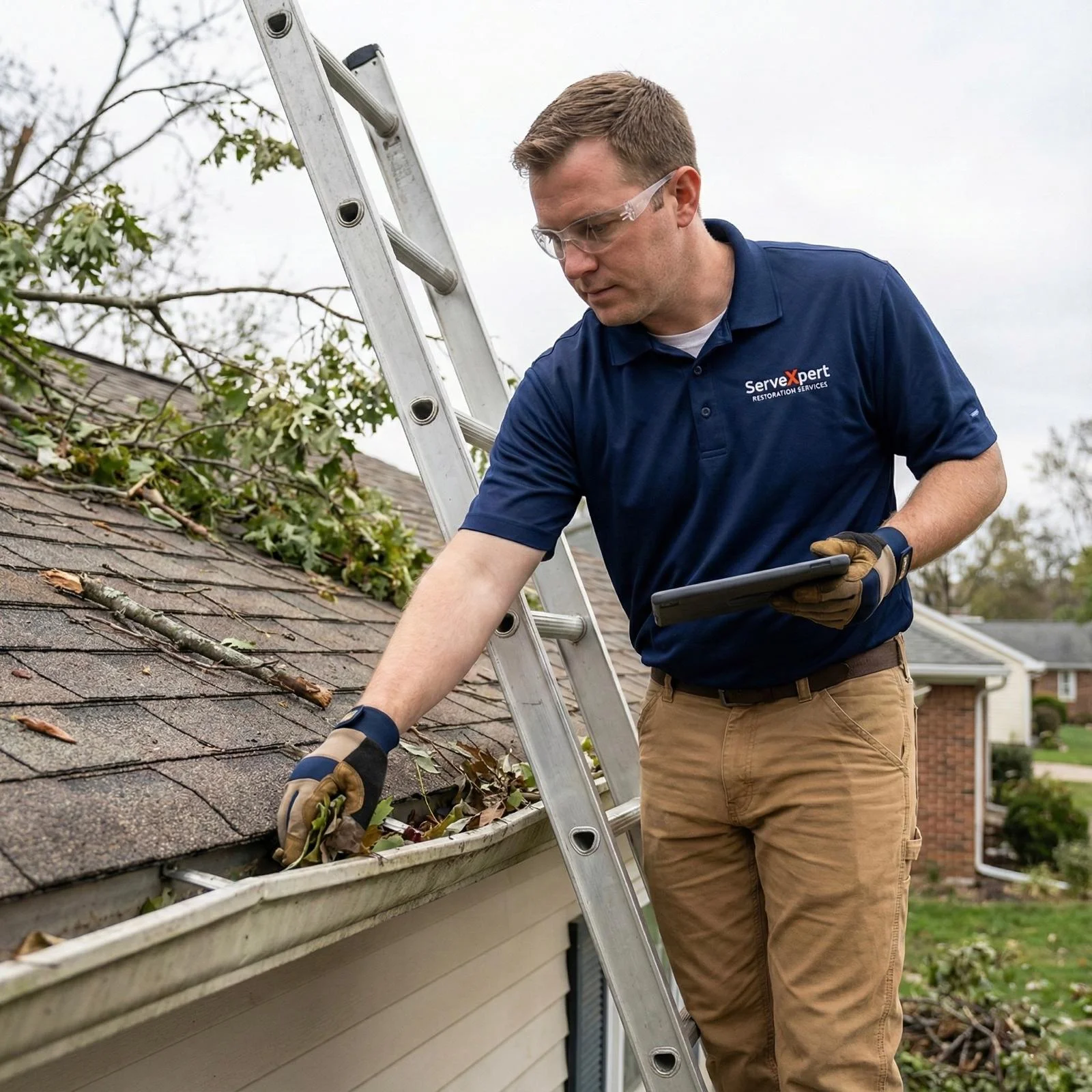
Record roof plane, system identity if known, active leakage/drainage and weather, penetration/parapet/seams, insulation/cover-board/deck types, interior water footprint, safe access limits and qualified roof survey evidence. Temporary tarping/protection can limit further entry but is not permanent repair. A certified/qualified roofing contractor designs flashing/membrane/insulation replacement and structural-deck repairs; Serve Xpert's supported mitigation involves observed interior affected material cleaning, extraction, selective removal and drying after hazard review. Document actual inspected versus uninspected components and obtain authorization for specialist repairs.