
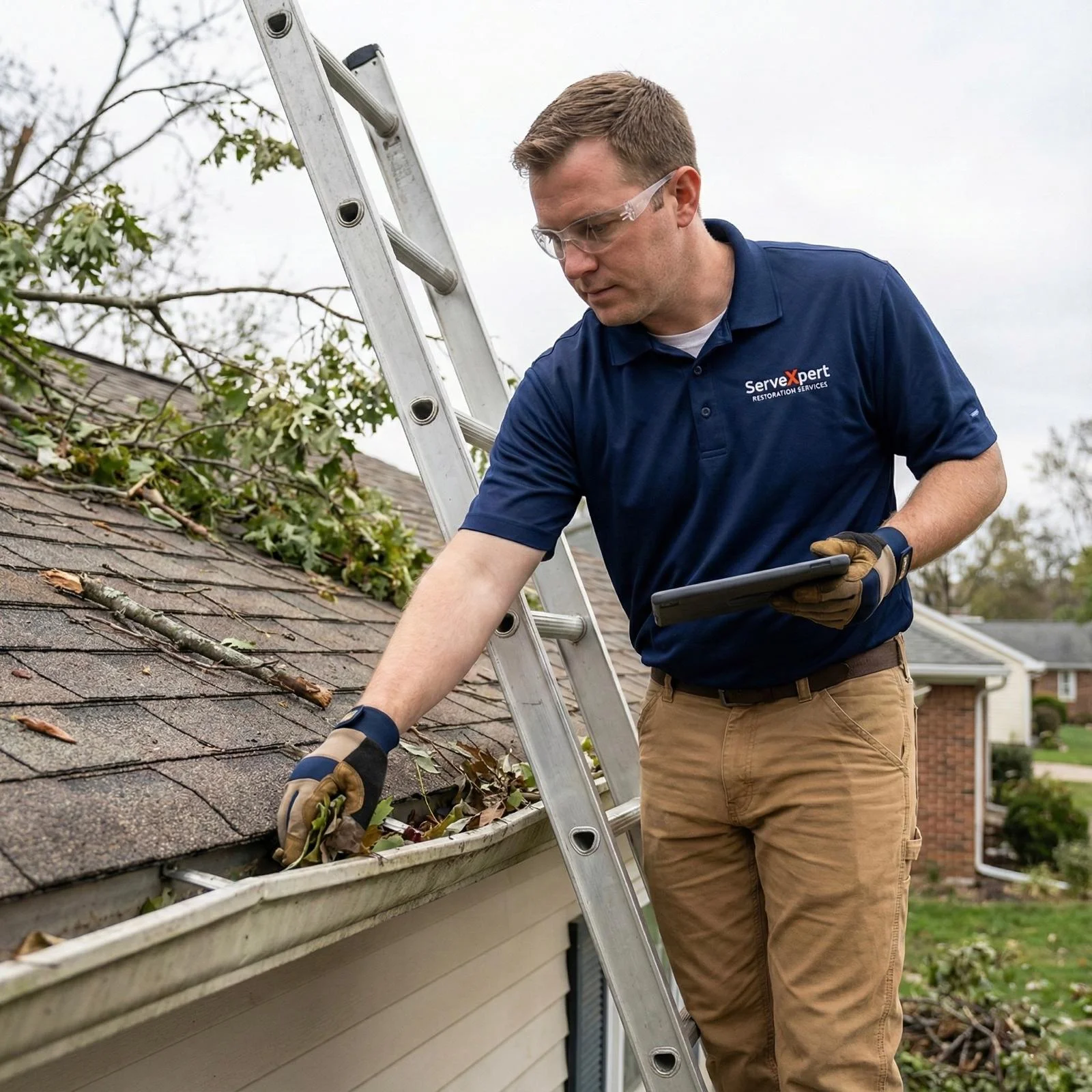
Asphalt Shingles and Roof Underlayment after water, smoke or contamination
A steep-slope asphalt shingle system includes overlapping asphalt-coated fiberglass shingles, flashing, starter/eave components, underlayment, specialty self-adhered ice/water shield, fasteners, ridge/ventilation and wood or other roof deck. Shingles are the main weather-shedding layer; underlayment is secondary protection and does not itself prove the deck dry. Wind-driven rain, ice dams, valley/penetration flashing or roof-wall defects can put water beneath the outer finish into sheathing, insulation and interior walls.
What the inspection covers
Record storm history as reported separately from actual photographed displacement, granule loss, torn underlayment, exposed deck, penetrations, flashings/valleys, roof sag and attic under-deck staining. A ceiling stain does not identify the exact roof failure without corroboration; an infrared anomaly alone does not measure deck wood MC or distinguish condensation. A qualified roof contractor assesses safe exterior access and source repair.
Cleaning, drying and specialist work
Emergency tarping/board-up is temporary stabilization, not permanent repair or evidence drying is complete. Maintain sound roof-deck wood where cleaned/dried and verified; repair/replace membrane/shingles/deck selectively or as qualified roofing system requires. Structural decay, rotten OSB, unsecured sheathing, fire-damaged support and unsafe roof load need qualified determination. Measure actual affected roof plane and interior water damage separately; no automatic conversion of regional storm news into claim causation or full roof replacement.