
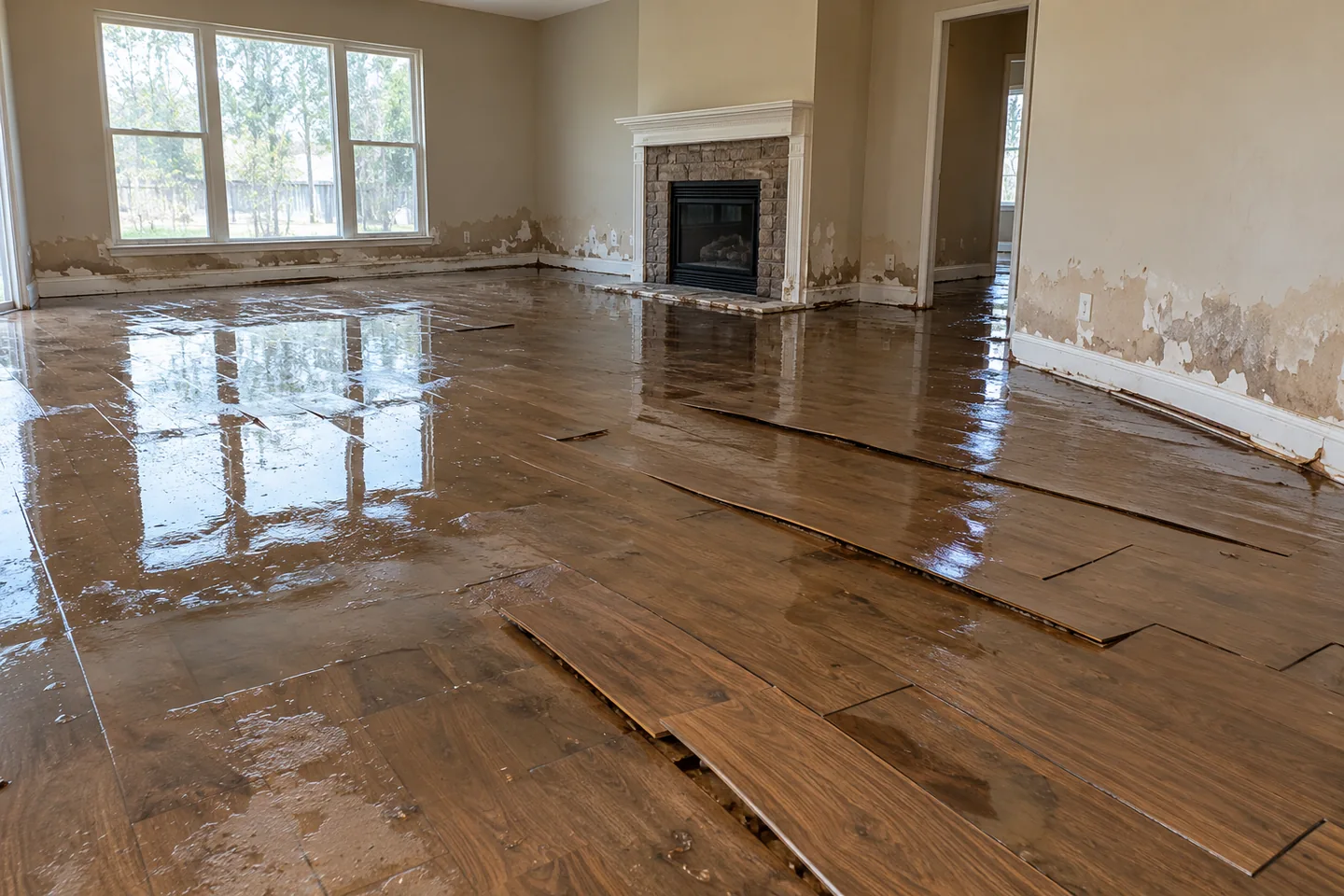
Flooring Adhesives and Mastics after water, smoke or contamination
Floor assembly adhesion may rely on water-based acrylic/pressure-sensitive adhesive, epoxy, urethane, cement thinset, older asphaltic mastic or manufacturer-proprietary product. Each differs in substrate, pH, moisture-RH acceptance, surface contamination tolerance, VOC/safety and reversibility. A flooring plank/tile can be water resistant while its adhesive, patch, acoustic pad or porous OSB/gypsum surface is not. Moisture entering at edge/transition and originating from below-slab vapor both merit source investigation.
What the inspection covers
Identify flooring cover and actual adhesive type if known, age/suspect asbestos or lead legacy product, bond loss, sticky/softened film, blisters, discoloration, perimeter gaps and subfloor water. A pinless top-scan is a screening indication; use manufacturer-required slab in-situ RH and/or accepted adhesive tests with actual reported standards, never generic wood-percent or an arbitrary 85% floor cutoff. Avoid aggressive grinding of suspect asbestos/mastic and control crystalline silica when cement removal is required.
Cleaning, drying and specialist work
Preserve firmly bonded, uncontaminated and demonstrably dry acceptable adhesive/substrate assemblies when permitted by product. Remove failed/contaminated non-cleanable layers for controlled substrate cleaning, drying and specialized moisture mitigation when justified. Reinstallation follows exact adhesive/finish manufacturer's specifications and qualified flooring-trade testing; no primer/sealer can substitute for source repair or automatically neutralize sewage in backing. Distinguish removal area from replacement layers and separate contract/authorized price.