
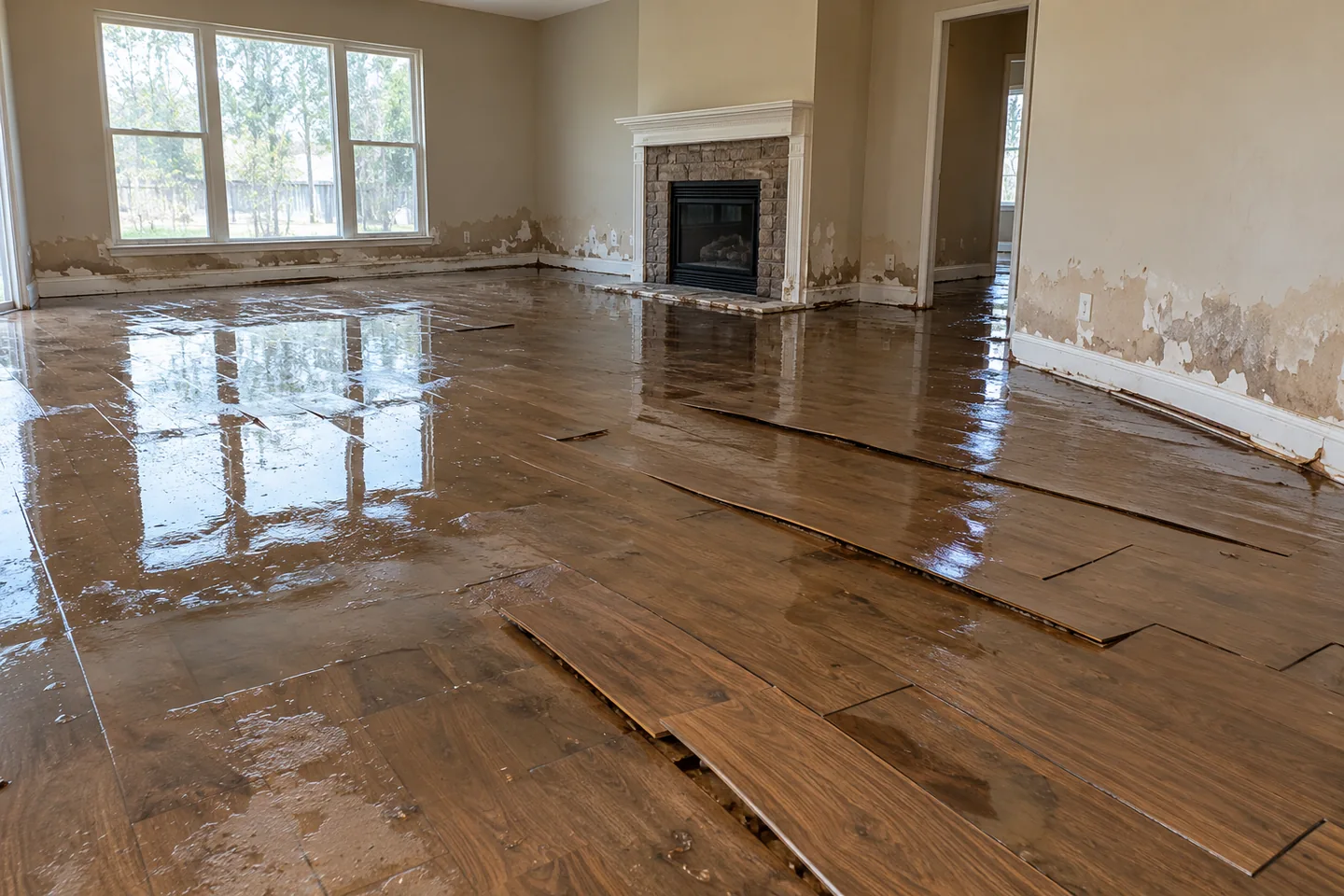
Gypcrete and Floor Underlayments after water, smoke or contamination
Lightweight gypsum underlayments (often called 'gypcrete'), self-leveling cementitious products and standard concrete slabs are NOT interchangeable. An underlayment is a specific layer above wood/concrete subfloor, often associated with floor coverings, sound mats and rated floor-ceiling assemblies. Water can seep through flooring joints, permeate the underlayment, degrade adhesive, remain above a vapor-retarding film or wet the OSB/plywood beneath. Mineral gypsum itself is not susceptible to wood rot; surface organic residue or the underlying wood can support mold.
What the inspection covers
Verify brand/product, underlayment thickness, finish adhesion and patch/repair compatibility. USG publishes separate drying-condition and rehabilitation guidance for its Levelrock and Durock gypsum underlayments. Incidental water exposure alone is not universal proof of unrecoverable damage, but saturation, friability, bond loss, cracking/softening and retained contaminants matter. ASTM F2659 meters are comparative only for concrete/gypsum slabs; ASTM F2170 slab RH should not be applied uncritically to gypsum underlayment, and product/adhesive acceptance criteria govern.
Cleaning, drying and specialist work
Map floor area, water category and source, finished covering, underlayment, separation, crush/crumble damage, below-deck wetting, material moisture test type and actual required repair responsibility. Retain sound, correctly dried underlayment only after product-specific evidence supports re-use and floor covering acceptance; selectively remove failed or contaminated sections where needed to treat/dry the substrate, taking care to preserve the rated acoustic/fire assembly. Qualified flooring/underlayment installer sets rehabilitation recipe, not a generic solvent or a 3-day machine schedule.