
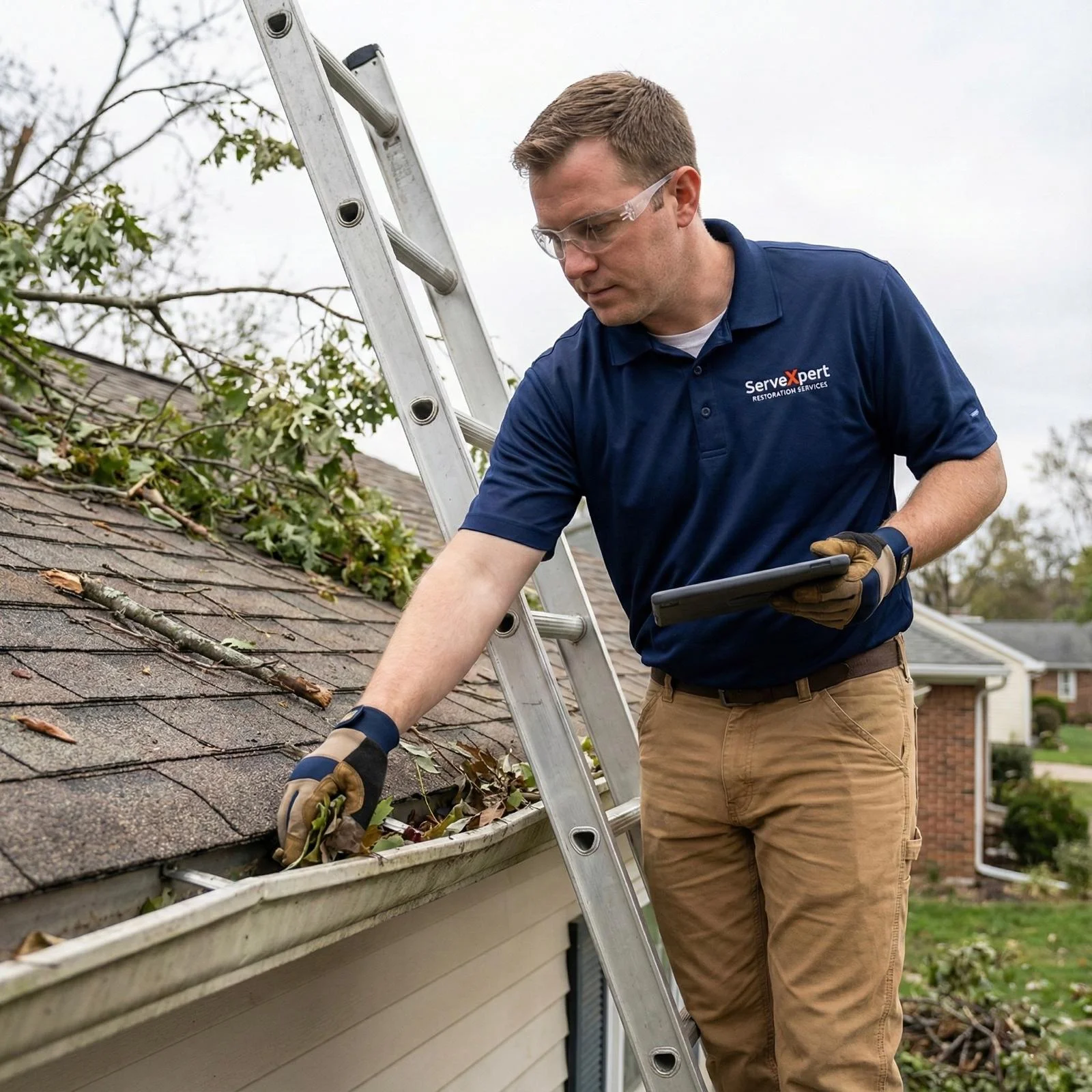
Fiber-Cement Siding and Sheathing after water, smoke or contamination
Fiber-cement siding/sheathing combines cementitious base and reinforcing fibers; proprietary treatments, panel thickness, paint, joint compound, fasteners and flashing differ by manufacturer. Cement-based faces do not undergo classic wood-decay rot, but the adjacent housewrap, cellulose dust, wood structural sheathing, furring, trim and studs can trap moisture and support mold. An intact painted panel does not verify that the drainage plane behind it functions.
What the inspection covers
Determine whether the material is a fiber-cement board, cement backing, gypsum sheathing, engineered-wood trim or PVC composite. Map roof/runoff, window interfaces, lap joints, flashing, weeps, loose fasteners, blistered coating, swollen wood substrate, mineral efflorescence and evidence of inward water migration. Electronic relative readings through cementitious cladding are not a calibrated percentage or proof of hidden rot. Respect façade access and cutting dust/respirable silica controls.
Cleaning, drying and specialist work
Retain stable cleanable panel with a repairable moisture source, sufficient drying and a functional drained assembly. A siding contractor repairs or replaces damaged, cracked, delaminated or dislodged components; opening may be needed to inspect actual wet OSB/wood cavity. A siding/window-roofing contractor verifies weather resistive layer, flashing and installed system compatibility. Scope observed mitigation separately from envelope reconstruction and quantify actual panels/SF/LF.