
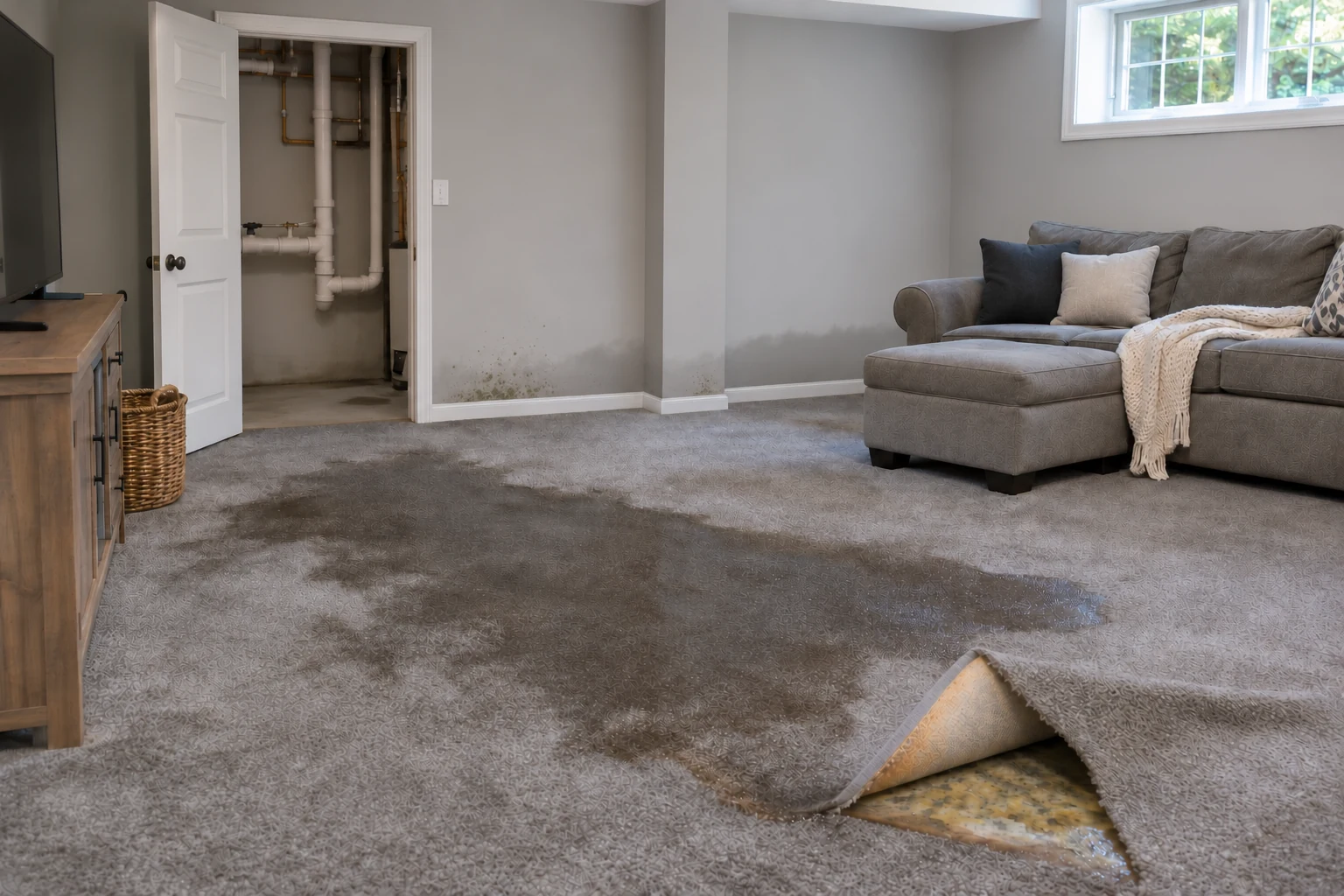
Drywall and Gypsum Board after water, smoke or contamination
A gypsum core with paper or glass-mat facers forms a layered product. Water can soften board, damage seams and attachments, and wet concealed insulation. Paper facers can support fungal growth. Soot-only deposition differs from heat/fire damage or firefighting-water damage. Decorative coatings may restrict drying.
What the inspection covers
Evaluate source contamination, soundness, drying access and microbial condition. The Gypsum Association's published guidance recommends replacing water-exposed panels unless its retention conditions are satisfied; flood/sewage-exposed panels require replacement under that guidance.
Cleaning, drying and specialist work
A moisture-meter comparison is not automatically actual percent moisture content. Selective cuts or full-height removal follow findings, hazards, assembly requirements and authorized scope rather than an automatic two- or four-foot rule. Protect utilities, control dust and inspect both sides and adjacent components.
Before the wall is closed
The water source, contamination and condition of the board matter. A fire-rated or sound-rated wall also needs a compatible repair by the rebuilding trade.