
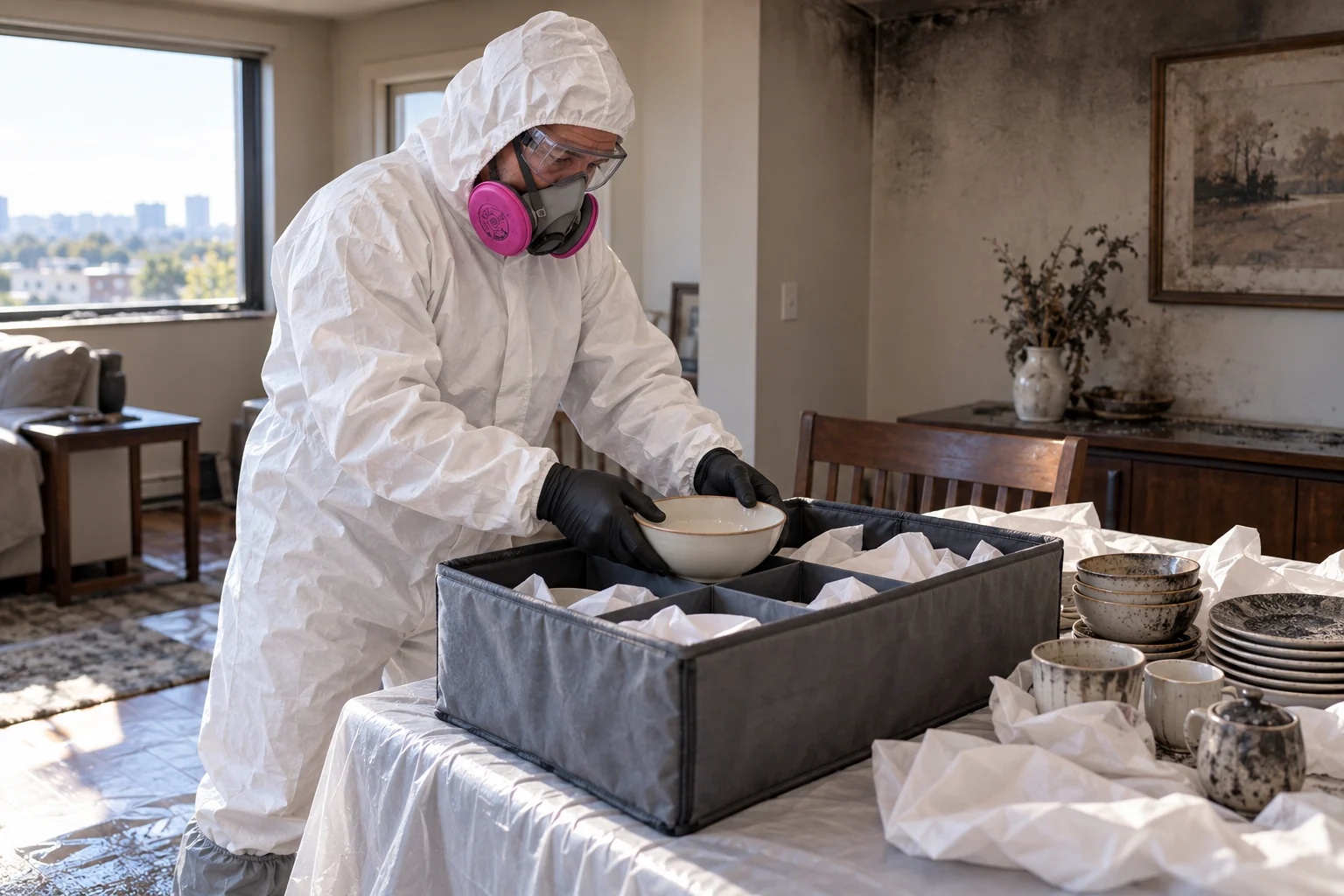
Clothing and Washable Textiles after water, smoke or contamination
Fibers, dyes, finishes, elastic components and trims react differently to heat, water, smoke and cleaning chemistry. Water can transfer dyes and enable mold; soot/odor may remain in fibers even when visible marks are limited. Biological contamination requires separate handling and an appropriate processing route, not an assumed ordinary wash.
What the inspection covers
Segregate affected items, inventory and follow care labels and textile-specialist evaluation. Suitable controlled laundering, professional wet cleaning or dry cleaning depends on construction and contamination.
Cleaning, drying and specialist work
Test sensitive fabrics and limit cross-transfer during transport. High heat can shrink or fix damage; fragrance does not demonstrate removal. Items that cannot be adequately cleaned or made fit for their use need a documented replacement/disposal decision.