At a glance
Key takeaways
- Name one site contact and confirm who can authorize access and work.
- Gather the incident timeline, access restrictions, and photos taken from safe locations.
- Ask which areas are ready for repair coordination and which still need cleanup, drying, or a qualified trade.
1. Confirm access and who is handling the source
Follow your building’s emergency procedures. Keep occupants out of areas with standing water, suspected electrical hazards, or sewage. Have authorized facility personnel or qualified trades address the source and any utility hazards. Tell the restoration team what has been isolated and which areas still have restricted access. For broader emergency guidance, see what to do first after property damage.
2. Assign a site contact
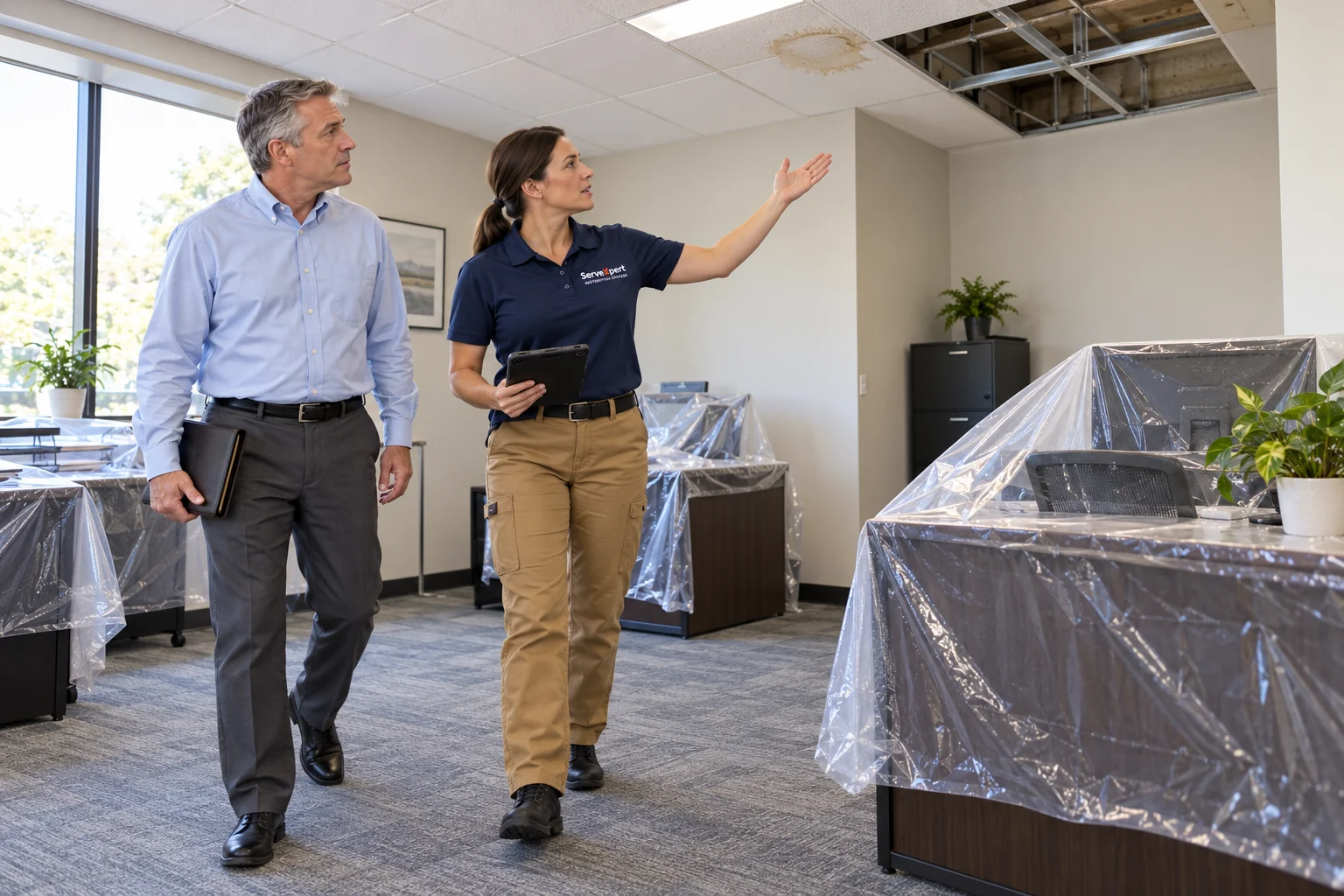
Choose one person to coordinate keys, escorts, tenant notifications, and service access. Record who can approve the work and who can make decisions after hours. Identify affected floors and suites, shared walls and corridors, and any access or delivery restrictions. Flag operations that depend on the affected area, such as a receiving dock or a shared customer entrance.
3. Gather the details for the first call
- Property address, site contact phone number, and access instructions.
- When the damage was found, what the suspected source is, and whether someone has stopped it.
- Affected rooms, materials, inventory, and any adjacent spaces that may need checking.
- Photos or video from safe locations, actions already taken, and applicable claim contact information.
Keep a dated incident log and save relevant receipts and written approvals. See the property damage documentation checklist for help organizing records.
4. Tell occupants what changes today
Share which rooms or routes are restricted, where people can enter, and who to contact with access needs. Give a time for the next update. Check with the restoration team before promising a reopening date. Use one update channel so tenants, staff, and contractors receive the same information.
5. Confirm the handoff to repairs
Ask which affected areas were addressed, what was removed, how drying progress was documented where applicable, and what remains restricted. Have the site contact review remaining source corrections, trade evaluations, or replacement work. Serve Xpert handles mitigation. Arrange permanent repairs and any required occupancy approvals with the appropriate parties.
Request help with commercial water damage. Share affected areas, access restrictions, and the name of your site contact.