
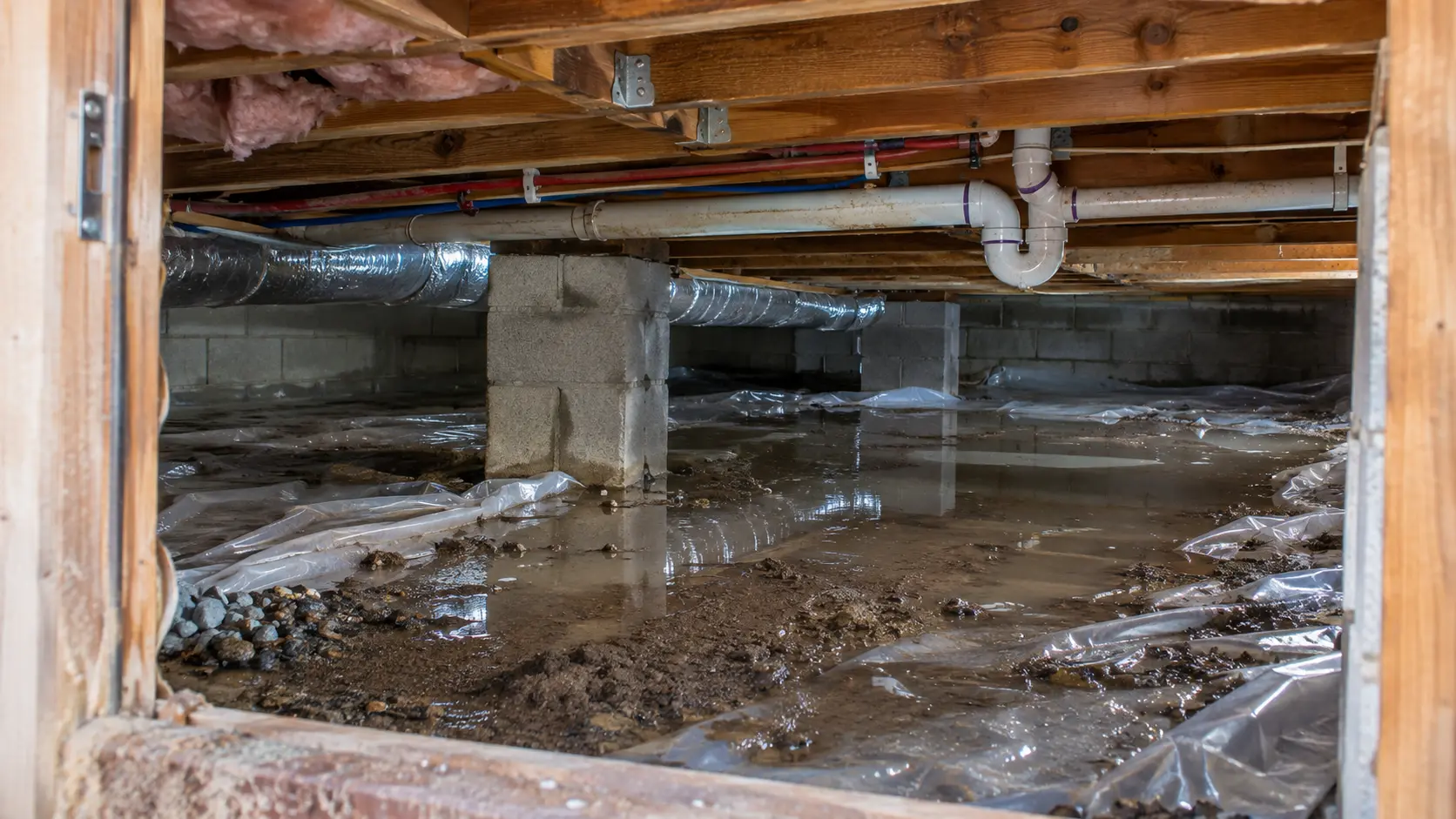
Standing water below the floor
Tell us whether water is still entering, where the access opening is and what you can see safely from outside the crawlspace.
Serve Xpert
Water beneath the floor can remain after the visible puddles recede. In Harford County crawlspaces, we assess accessible joists, subflooring and insulation, remove recoverable water and plan drying around the actual conditions.
Service area
Check your property’s location before requesting service.
These communities are in the Harford County service area. We review the property address, access, and urgency to confirm availability.
Explore all Harford County services · See the crawlspace water damage restoration overview
Tell us whether water is still entering, where the access opening is and what you can see safely from outside the crawlspace.
Damp insulation can conceal moisture at joists and the underside of the floor. We check accessible materials before deciding what can dry in place.
Share any known plumbing work, drainage issue or timing after rain. The source and materials reached affect the cleanup and drying plan.
Assess the crawlspace
We review the source history and check accessible wood and insulation for moisture and affected material.
Extract water and address materials
We remove recoverable standing water and explain any contamination, insulation removal or cleaning required before restorative drying.
Monitor drying
We use repeated readings to assess progress against the drying goals and document the work performed.
Tell us the property ZIP, where the crawlspace entrance is and whether there are standing-water or electrical concerns. Do not enter a flooded space to take photos.
A plumber, drainage specialist or other qualified trade may need to correct the source. Existing ground cover and drainage can be reviewed, but a new vapor-barrier system is not automatically included in water mitigation.
Helpful answers
Yes. Accessible framing and insulation can retain moisture. An assessment and repeat readings help determine the drying needs.
Ground-cover or drainage work needs its own assessment and scope. We will explain any condition we find and what trade or separate work is needed.
Restoration Resource Center
Learn more about assessing damage, planning cleanup, and what to share when you request service.
Learn how extraction, moisture mapping, air movement and dehumidification work together, and what readings show when drying is complete.
Learn how water moves under floors and behind walls, which clues warrant a closer look, and how a crew checks for concealed moisture.
Share the property address, the affected areas, and what has happened so far. For an active emergency, call (888) 338-0519.
For assistance with this request, call (888) 338-0519.