
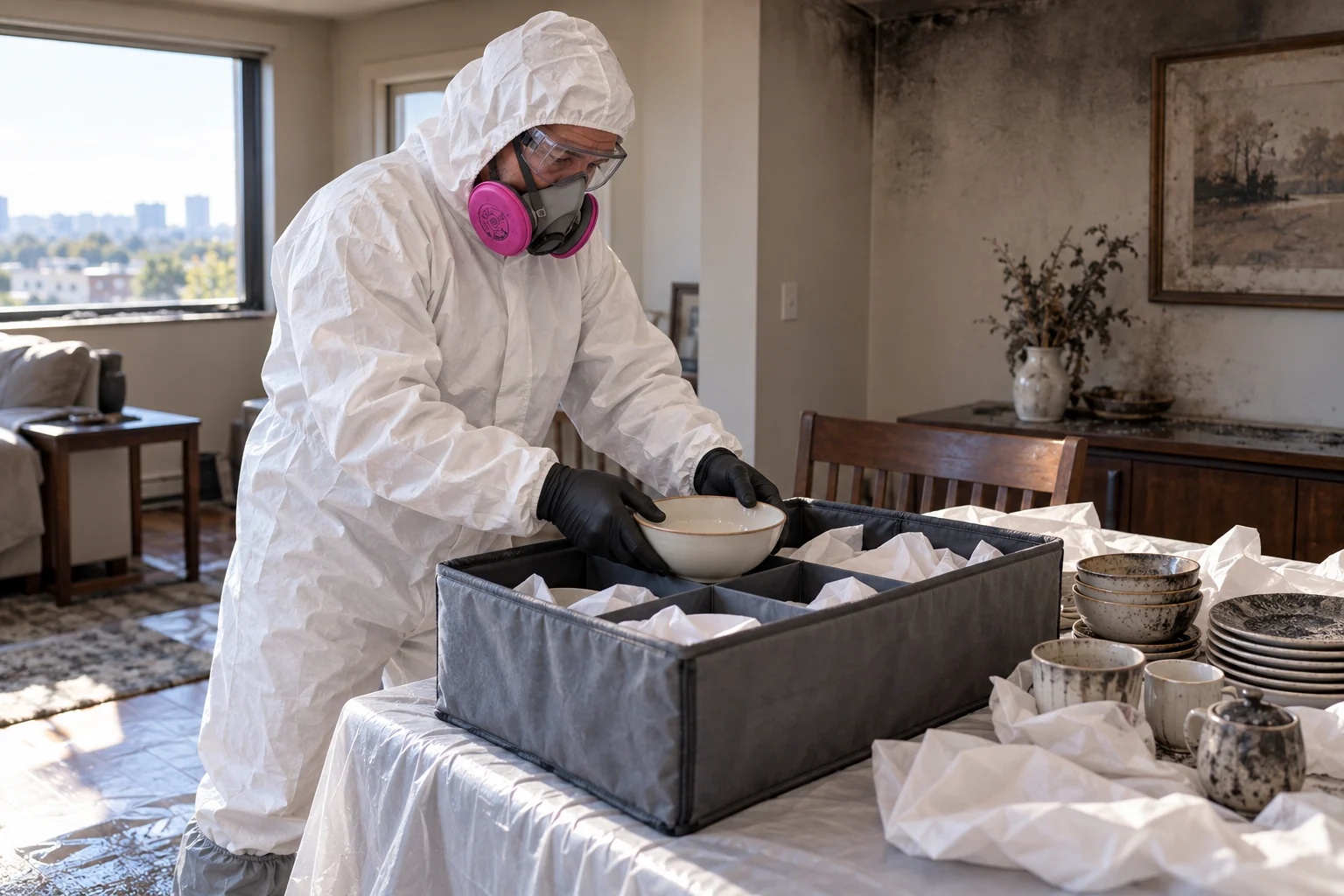
Plastics and Acrylic Contents after water, smoke or contamination
Polymer type, additives and coatings determine heat, solvent and oxidizer sensitivity. A hard plastic face may be nonporous yet scratched, crazed, warped or chemically damaged. Water can affect concealed foam, labels and joints. Smoke residues or odors can migrate into some polymers; cleaning the surface may not remove absorbed odor.
What the inspection covers
Identify the product and test a compatible method on an inconspicuous area. Avoid solvents, abrasives, high heat and oxidizers unsupported by its instructions.
Cleaning, drying and specialist work
Separate appearance restoration from hygiene or structural function, particularly for food-contact, child-use or protective equipment. Cracked or deformed components, inaccessible contamination or persistent absorbed residue may justify replacement. Specialty plastics or valuable objects may require conservation advice.