
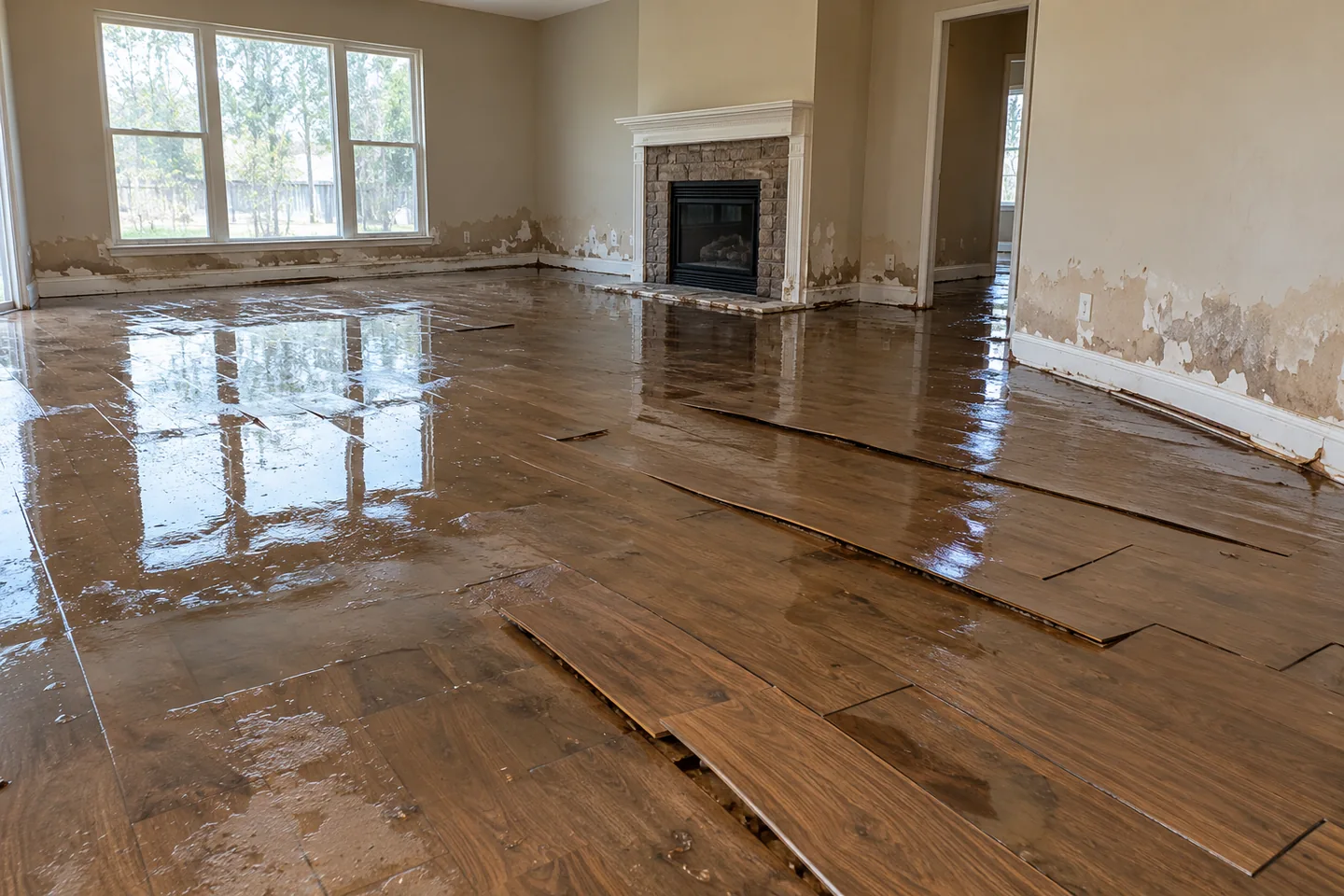
Foam, Cork and Acoustic Floor Underlays after water, smoke or contamination
Floating LVP/laminate can include foam polyethylene/EVA pad, cork, felt/fiber, rubber, bonded asphalt-like acoustic membrane or manufacturer attached backing. Material chemistry and porosity differ; some polymer pads absorb little liquid but permit a thin water film to remain trapped between plank and wood/gypsum/concrete subfloor, while cork/natural fiber and adhesive can absorb and retain contamination. An intact 'waterproof' plank is not proof the pad and subfloor are dry.
What the inspection covers
Identify covering and pad type, thickness/attachment, seam and perimeter, leakage pathway, visible organic residue, adhesive transfer, discoloration, moldy odor, swelling, mat compression and concealed wet subfloor. Access a limited perimeter or damaged floor area only with actual authorization. Screen comparative electronic meter points, but no foam/cork universally reliable 'MC%' threshold exists; test wooden or concrete subfloor with proper approved techniques and separate floor-install acceptance.
Cleaning, drying and specialist work
Dry/retain clean intact accessible compatible nonabsorbent layers only where producer permits reuse and underside cleanliness can be verified. Remove contaminated, swollen, soiled, adhesive-failed or inaccessible pad and inspect/clean/dry backing/subfloor independently; keep stain/odor and structural failure distinct. Quantify square feet of pad, plank, floor preparation and source repair separately in an estimate, avoiding billing same layer twice.